25 June, 2024
OOLAB. How we developed a better Rise.
The never-ending quest for perfection.
Perfection is a never ending journey. With Rise, we refuse to compromise and never stop pushing on our quest to create the ultimate lightweight eMTB. We wanted even better handling. More range, without compromising weight. A more natural, yet more powerful bike. By listening to feedback from riders, employees and dealers, we identified areas for improvement. Then it was an intense cycle of development and testing to step the Rise up to the next level, and beyond.
Handling – Making the most connected ride.
Tuning rigidity.
Our testing shows us that rigidity is crucial to handling. The best-handling bikes are light, not too flexible, and not too stiff. A degree of flexibility allows the bike to adapt to the terrain and find more grip. We can fine-tune rigidity by altering frame shapes, adding material, or employing clever design to reinforce specific areas. The optimal frame design makes it easy to adjust rigidity where needed.
Perfecting rigidity.
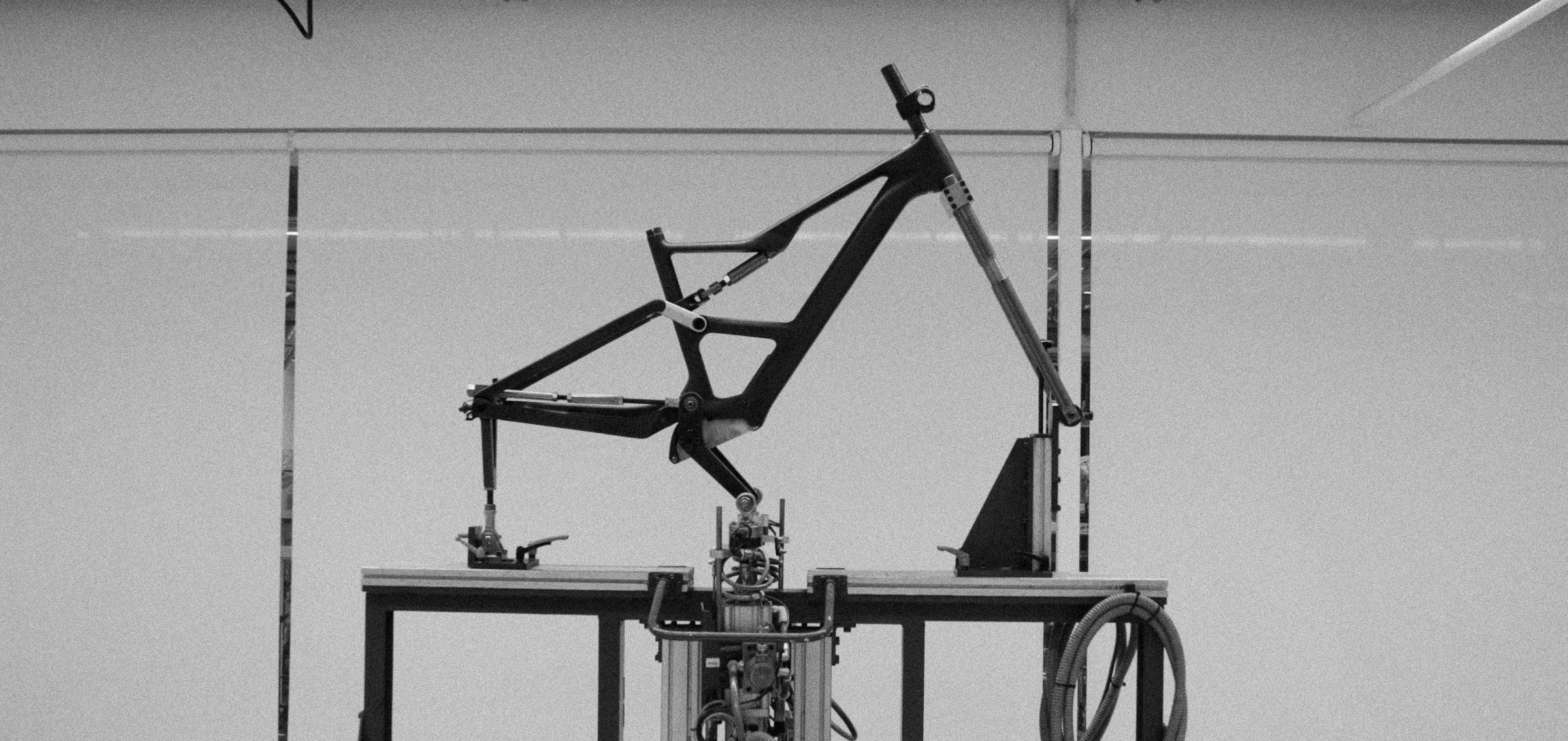
Designing and testing rigidity is a complex process. Finite Element Analysis (FEA) provides a starting point, but real-world testing is essential. In the lab, we build models and test them, but ultimately, it’s the riders who judge the success, and linking these scientific numbers with rider feel is no easy feat. This iterative process, honed over our last generation of bikes, has led to a deeper understanding of how we can perfect rigidity.
The end result makes for an increase of 14% in stiffness to the rear end and an 8% stiffer front end when compared to the previous model of Rise.
Size tuned rigidity.
Larger bikes have longer tubes which decreases rigidity, this is counterintuitive since larger riders need more support. Our control over rigidity allows us to adjust the frame so that each size feels consistent. This is size-tuned stiffness, and we believe we are the only bike manufacturer currently implementing this.
Not just rigidity.
Handling isn’t just about rigidity. The Rise also boasts improved kinematics with more travel and a more progressive feel. The geometry has been fine-tuned to add capability, it’s slacker, and we have also been able to offer the same length chainstays as we have on our Occam. This was a difficult process, requiring improvements to our manufacturing tolerances, but it was essential to give the natural handling we wanted.
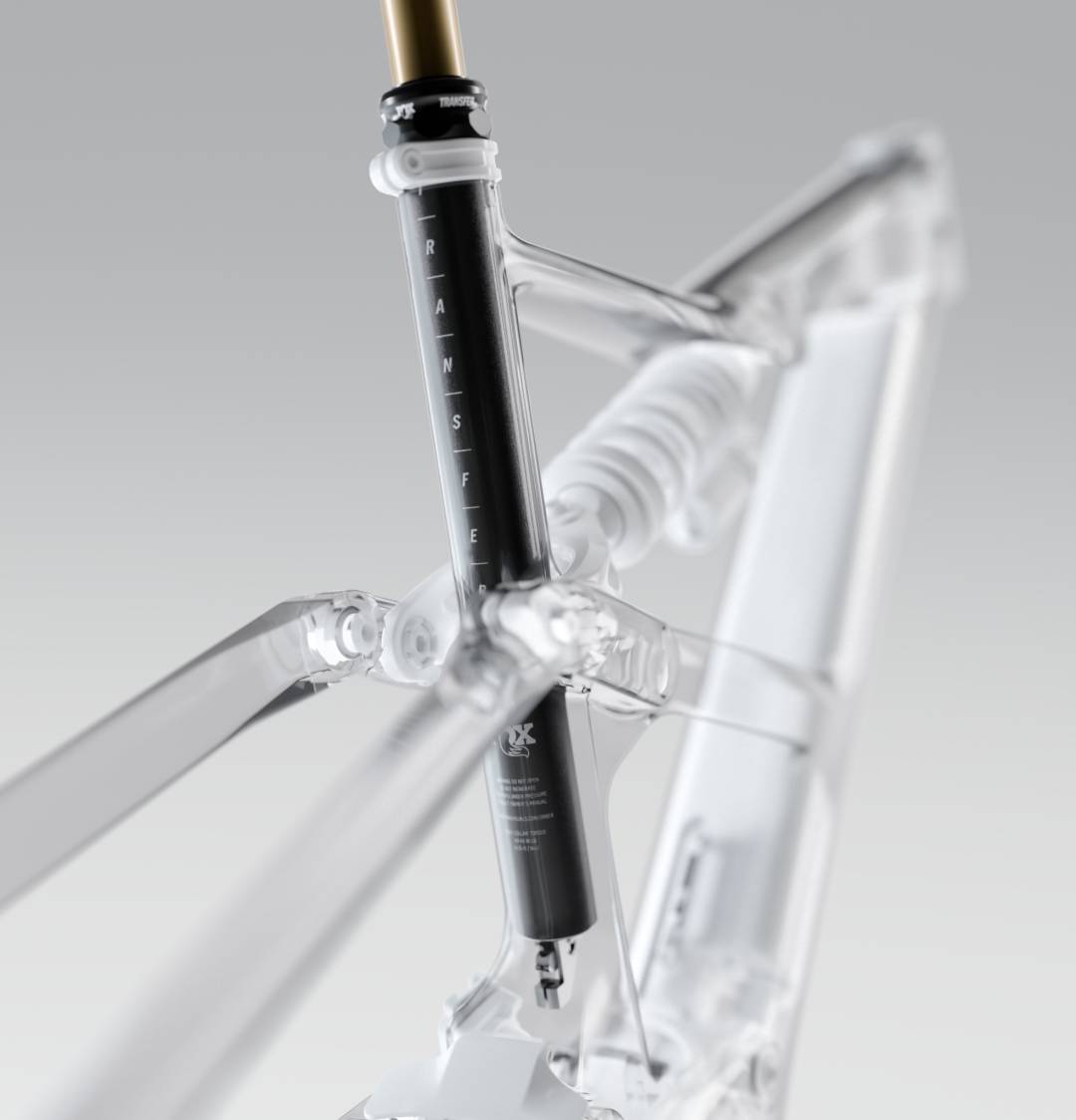
Steep’n’Deep was also essential for us and was equally difficult to achieve. We needed to completely redesign the electronics and make a custom charging port to allow full insertion for long travel droppers. This was an essential part of the project because you can’t have the best handling if the seatpost is too high.
RS Power – Making the most natural ride in more situations.
Real world rides – In the lab.
OOLab employs a cycle of: Computer >> Lab >> Trails >> Repeat. To test power, we built a lab to simulate trail conditions and a black box recorder to capture real ride data, motor performance, battery status, GPS, and more. This allows us to replay real rides under controlled conditions, to see how changes to the motor control software affects performance.


Refining our data.
In the lab, we push, monitor and tweak the motor. On the trails, we test and record data, and correlate it with rider feedback, bringing our findings back to the lab for further refinement. This process ensures that the motor delivers a consistent and natural feel out on the trails.

Power and torque.
Our testing revealed that in many systems, peak power drops as heat is generated, or the battery discharges. We opted to limit the power slightly, creating a tune that feels natural, provides ample assistance and remains consistent from 100% charge down to around 5%. This approach protects the battery, extends its life, improves efficiency and most importantly, improves the overall feeling of the bike. It’s interesting to note that in tests, most riders didn’t feel any limit in the power compared to a full powered motor.
Optimising performance.
We found that the RS Gen1’s 60Nm of maximum torque felt less natural for lower cadences on technical trails. Increasing the torque to 85Nm made lower cadences feel more natural – it sounds easy to just simply turn the torque up, however in reality, to give optimum performance it required a total redesign of the motor and battery control protocols.


Why does more torque feel more natural at lower cadences?
Power = Cadence x Torque. The peak power is only important at higher pedalling cadences and on technical trail rides, few riders are spinning that fast. At a lower cadence, with a low torque limit, it is impossible to reach the maximum power of the motor. There’s two solutions to this problem; either pedalling faster, or increasing the torque limit. Pedalling faster on a really technical trail just isn’t physically possible, so we decided to increase the torque limit.
Since power is dependent on cadence and torque, at low pedalling cadences we reach the torque limit before the motor can generate peak power. This makes a bike sluggish to react at the low cadences we use on technical trails, where pedalling faster is not physically possible. By increasing the torque limit we are able to generate more power, and the bike reacts more naturally to the rider input.
RS Range – How we made the best batteries on the market.
Latest cells.
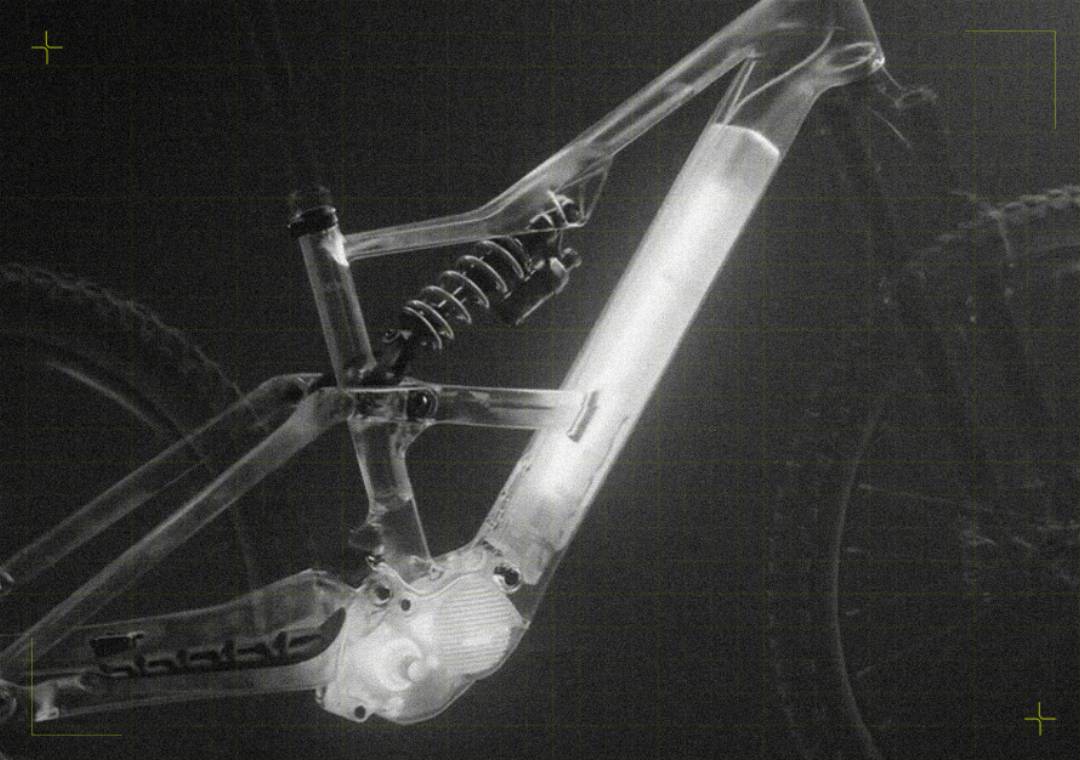
A battery is more than just a collection of cells. The type of cells and how they are packaged significantly impacts performance. So, when we developed one of the first batteries on the market to use the cutting edge 5.8Ah cells, we were able to pack more charge into the same space, without increasing weight. Simply put, the higher the Ah, the more charge can be stored, meaning it can provide more Amps for a longer period of time.
Let’s break this down:
Basically, higher Ah means more charge stored in the cell. That means it can provide more Amps for a longer time period. This is a measure of electrical charge. Q=It. I in Amps, t in h.
Therefore, 5.8Ah means it can provide 5.8amps for an hour.
5.0Ah is generally the current industry standard.
You are probably used to seeing Wh when referring to batteries, right? That is the energy contained within a battery. E=Pt. P is in W and t in hours in this case. So, this means that Energy is measured in Wh.
Since P is proportional to the charge in the battery, it means that our 5.8Ah batteries can offer more Energy (Wh) for the same number of cells.The end result is that it remains the same weight.

Increasing efficiency.
Controlled discharging under lab conditions allows us to monitor every cell. By managing heat and connectivity, we create a more uniform battery, enhancing efficiency and reliability. We minimised heat generation, increased efficiency, and extended range.

The relentless pursuit.
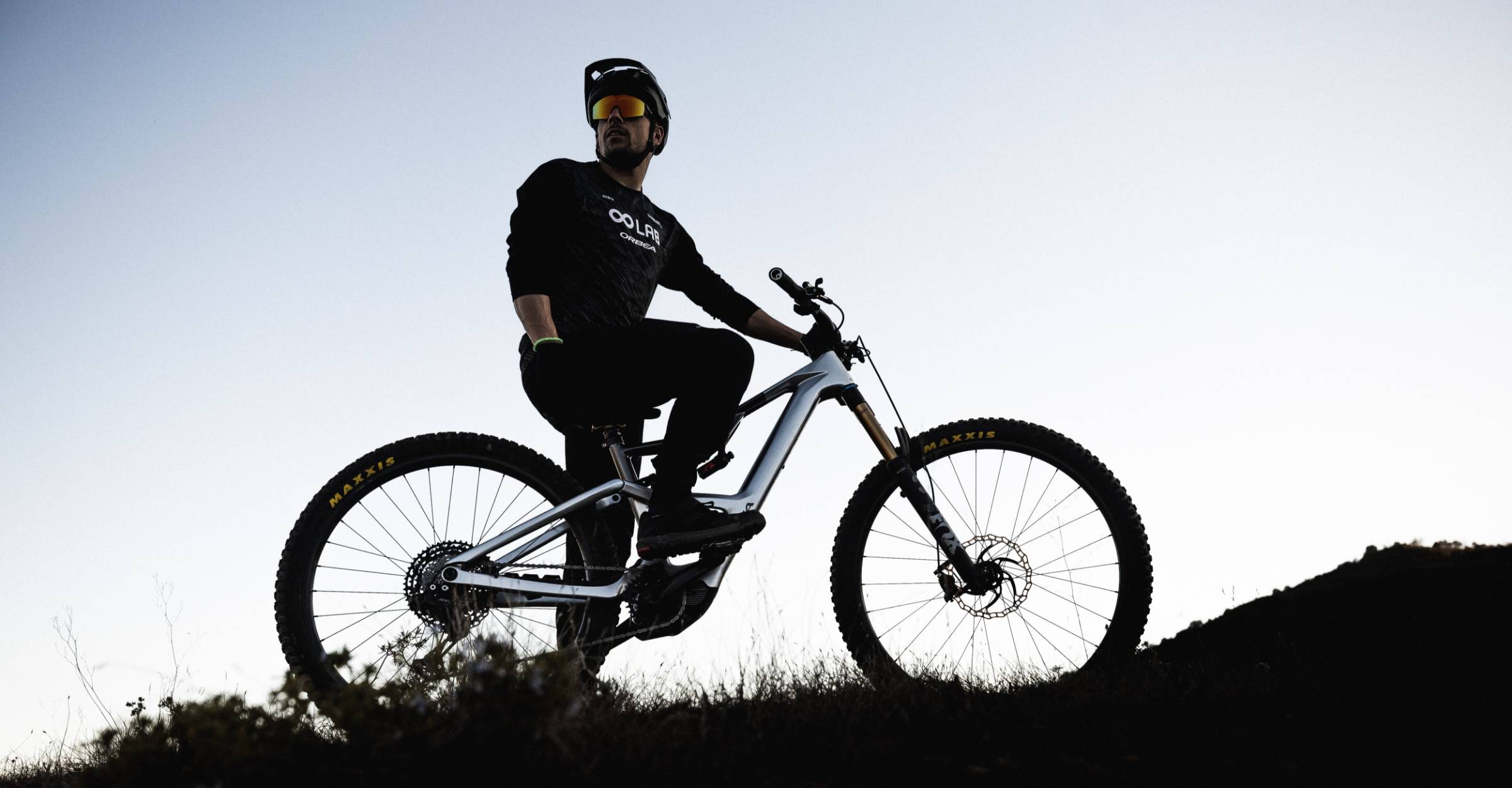
The Orbea Rise’s development journey highlights a relentless pursuit of perfection. Through rider feedback, dealer insights and advanced testing under the OOLab umbrella, we’ve enhanced all the areas we set out to achieve.