1 days ago
How We Developed the New Oiz with OOLab
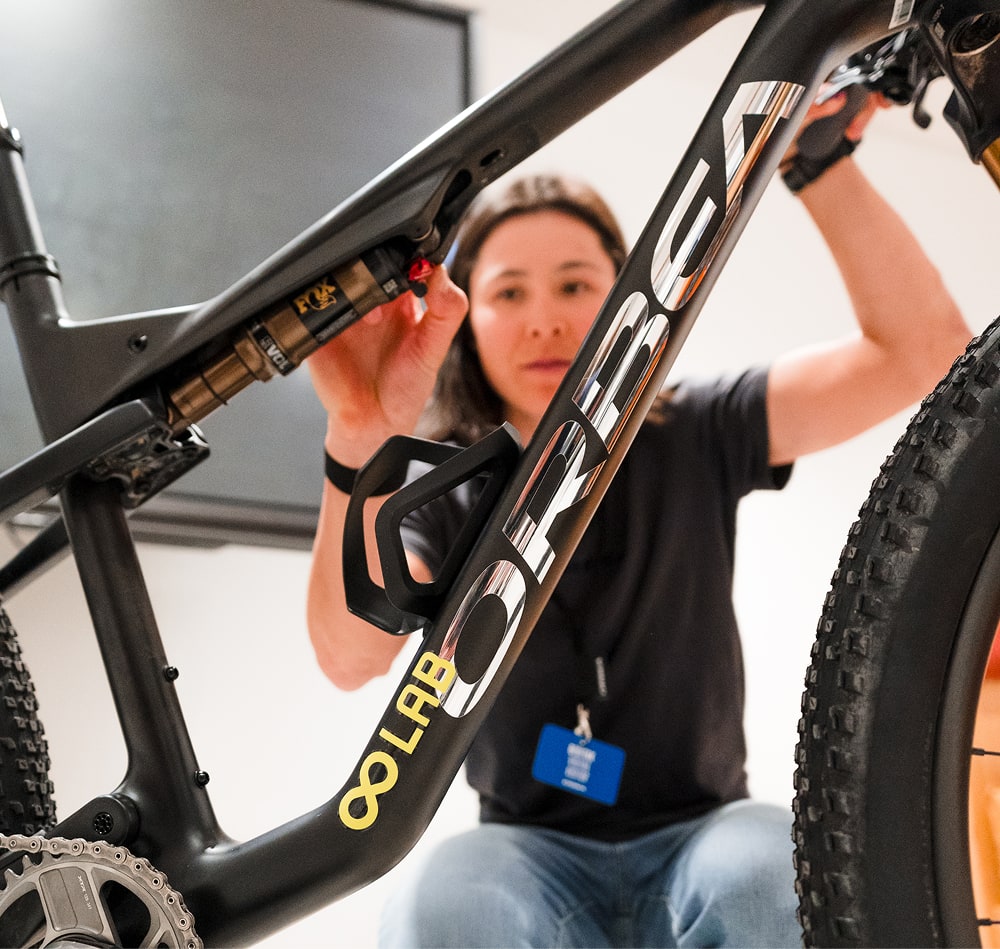
OOLab is the Orbea Optimization Lab. It isn’t a physical space, but an approach that removes the strict constraints of traditional product development. It gives us the freedom to explore new ideas and gain a deeper understanding of how our products perform. Not every idea needs to make it onto a bike. What we learn from testing them becomes part of how we keep improving.
The development of the new Oiz is a clear example of where this more open-ended approach can lead.
Setting the Challenge
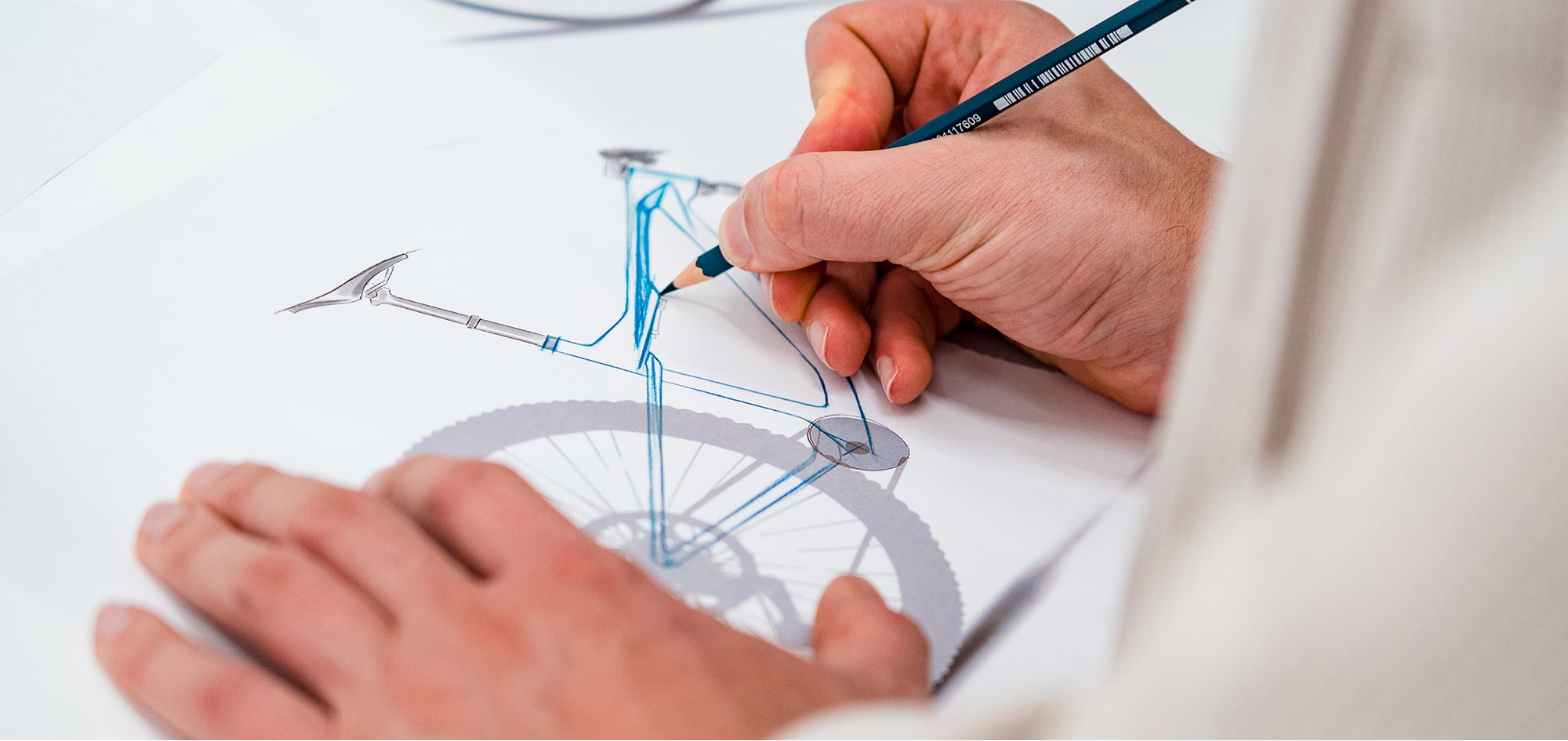
Modern cross-country racing is faster and more technical than ever, pushing both athletes and their equipment to new limits. When the margins between victory and defeat are often measured in mere seconds, building a competitive race bike takes more than chasing the lowest number on the scale.
At Orbea, we’re driven by the belief that there’s always room to improve. It’s what pushes us to question our own achievements, challenge what we know and keep searching for more, even when we’re already competing at the highest level. The new Oiz was born from that same ambition.
The Pursuit of Ultimate Performance
The previous generation of Oiz, launched in 2022, marked an important step in the bike’s evolution. By standardizing 120 mm of travel across the range, we created a bike that combined the efficiency and speed of XC racing with the capability needed for increasingly technical courses.
Over the four years between generations, OOLab gave us the freedom to explore new solutions beyond the constraints of a conventional product cycle. We took the time to develop and test different ideas, refining the bike until we were confident that the changes would deliver meaningful improvements.
One of the central goals was to increase frame stiffness without adding unnecessary weight. Unwanted frame flex has several consequences: it degrades steering precision, wastes rider power during explosive sprints, and disrupts suspension action. Increasing rigidity across a full-suspension frame typically requires adding material, and subsequent weight. On the other hand, an overly stiff frame sacrifices traction and can increase fatigue. Our engineers re-evaluated every structural junction of the bike to seek out the proper balance.
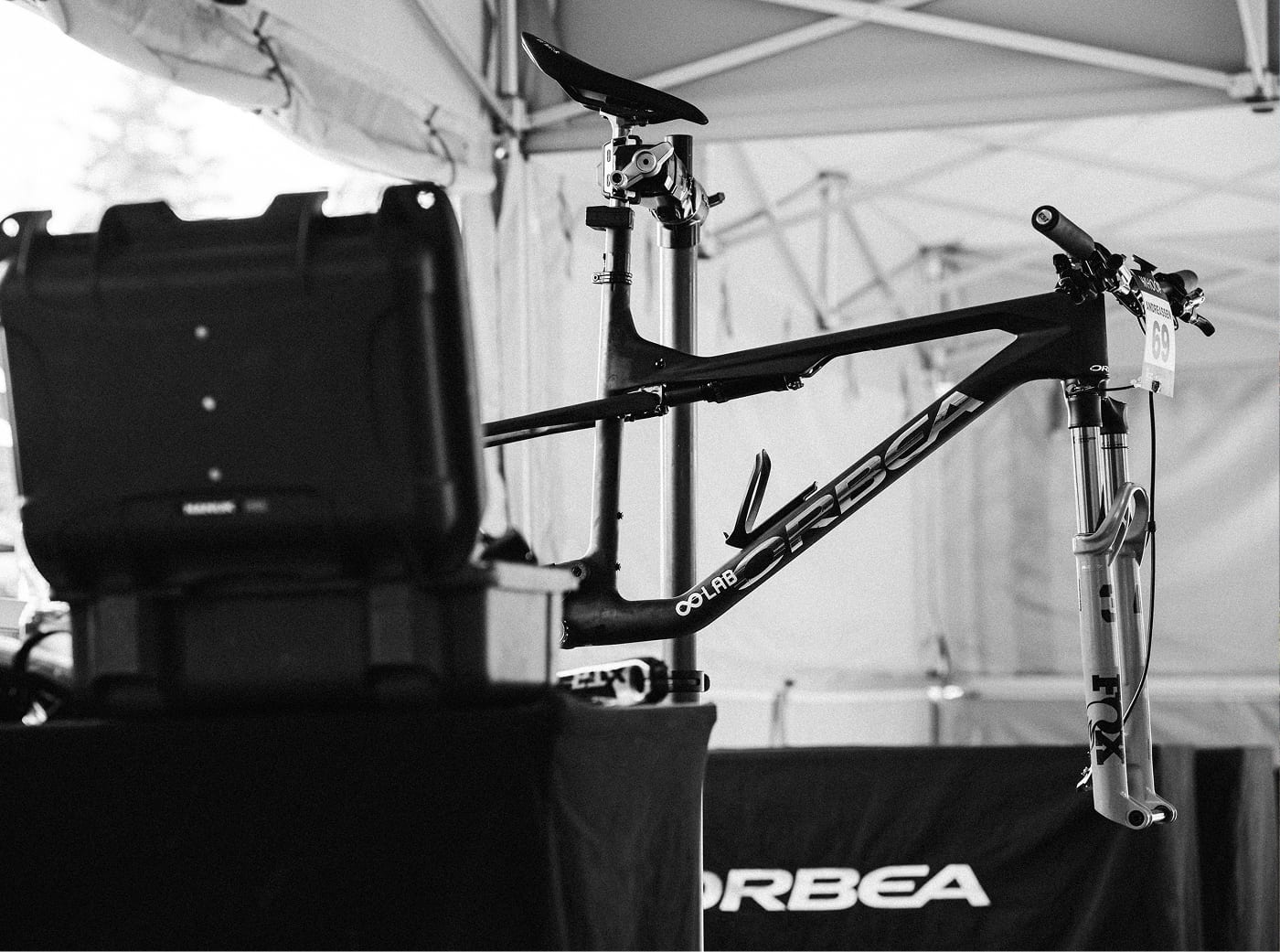
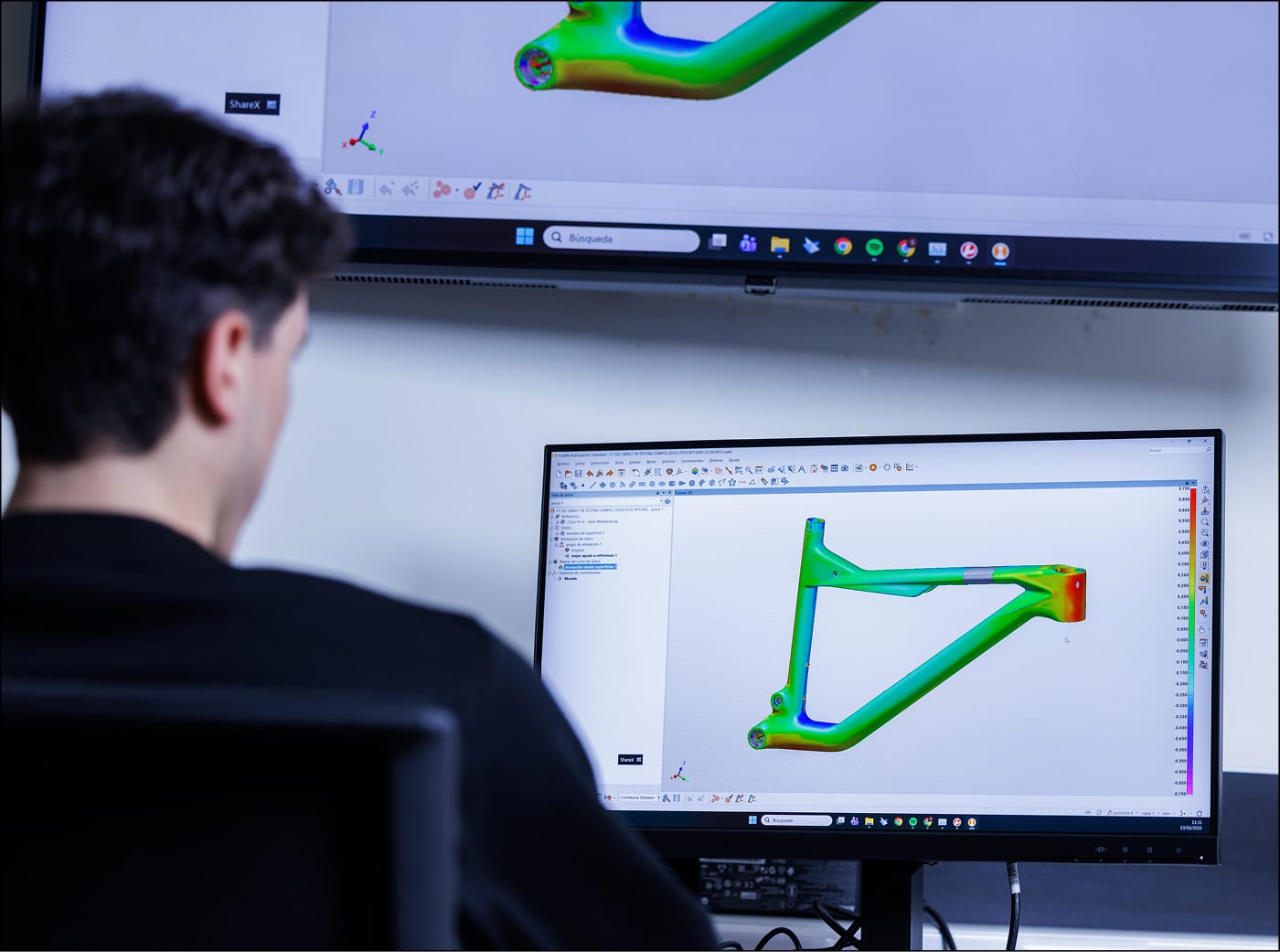
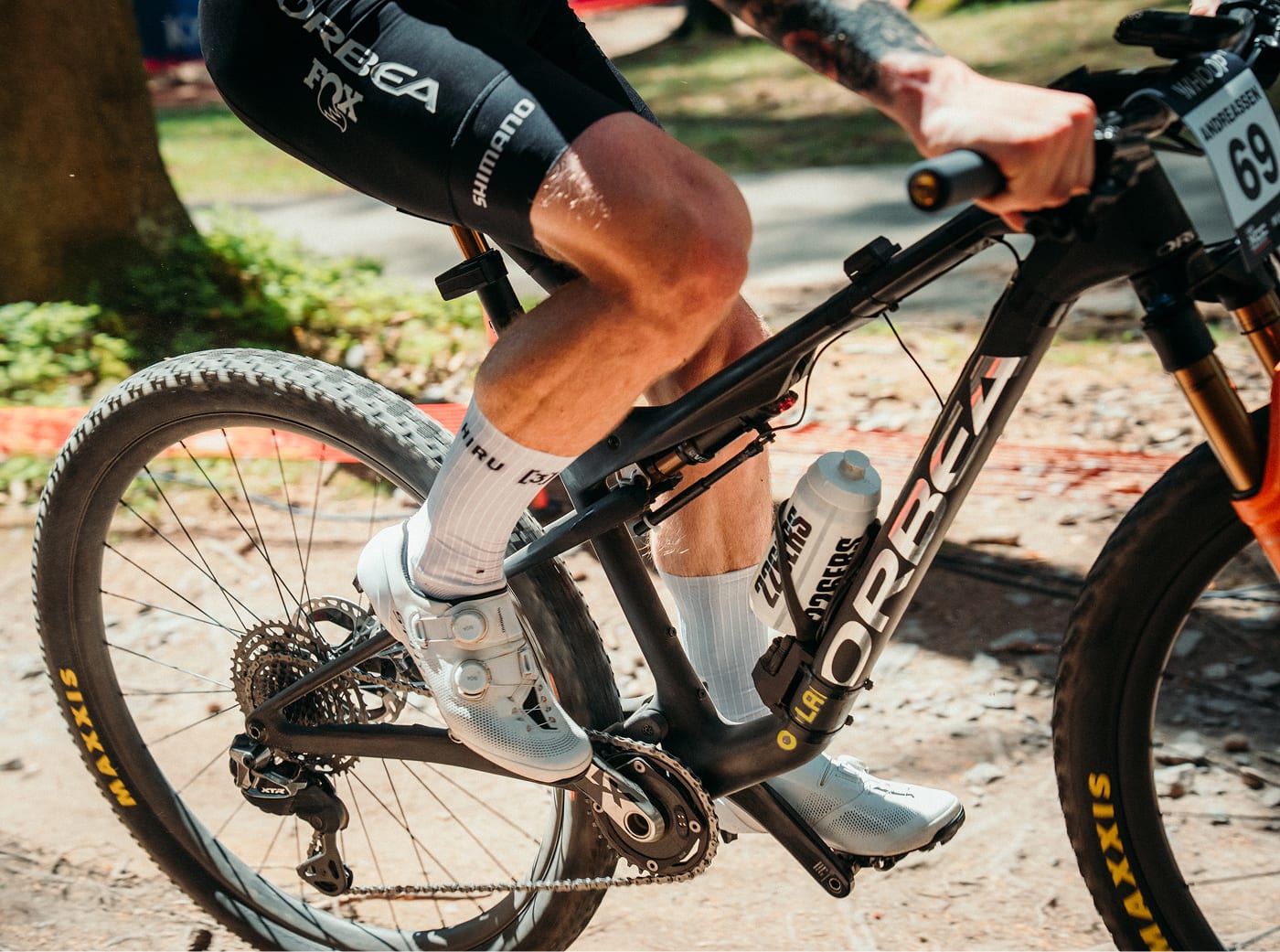
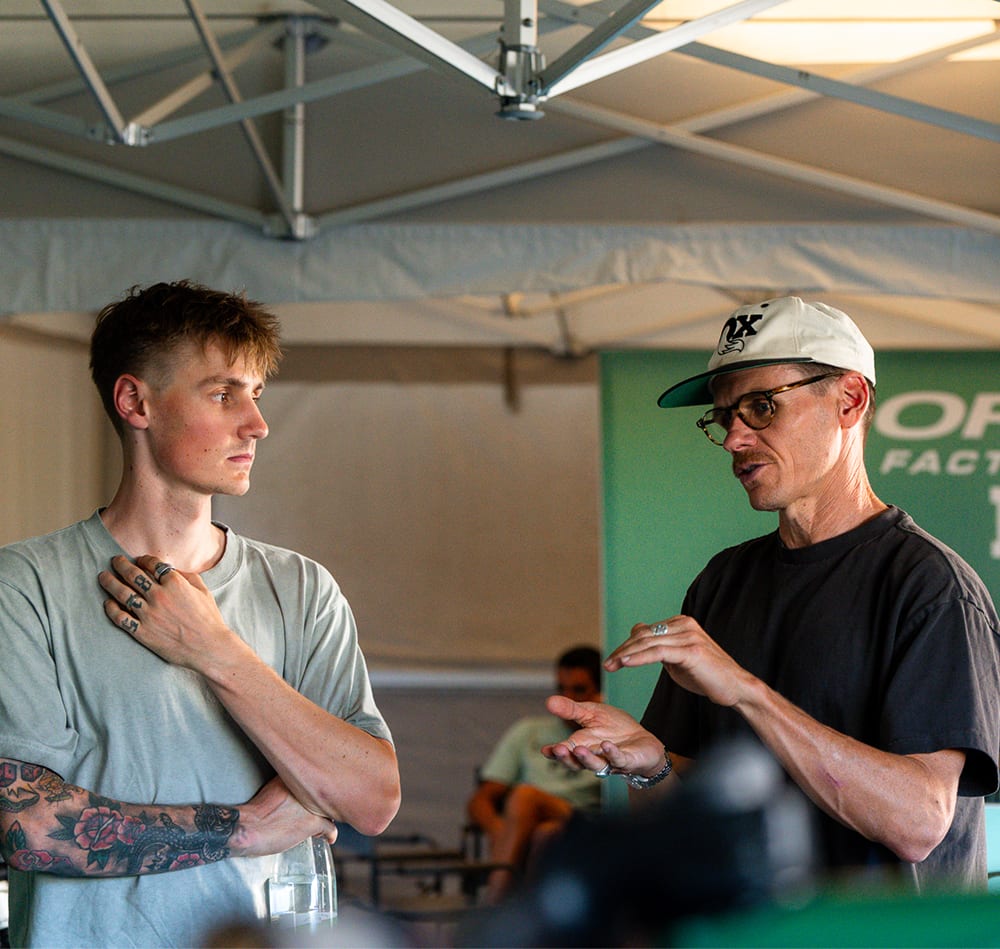
Early in the development process we explored ideas using advanced modelling tools. But computer simulation can only take you so far. Taking it further means taking to the trails, with prototypes and feedback from the Orbea FOX Factory Team. Our engineers evaluated and refined several successive rideable prototypes with the riders before taking near-final versions to the World Cup circuit at Nové Město na Moravě, disguised under stealth OOLab graphics.
Through Finite Element Analysis (FEA) and extensive carbon layup testing, the engineering team experimented with multiple prototype structures. During blind ride testing, team athletes consistently selected a bike with a layup that was nearly 50 grams heavier than an ultra-light prototype. It wasn’t a matter of chasing maximum weight savings for the sake of achieving the lowest number on the scale. It was about finding what helped the riders feel best when pushing the bike to its limit and achieving their fastest results.
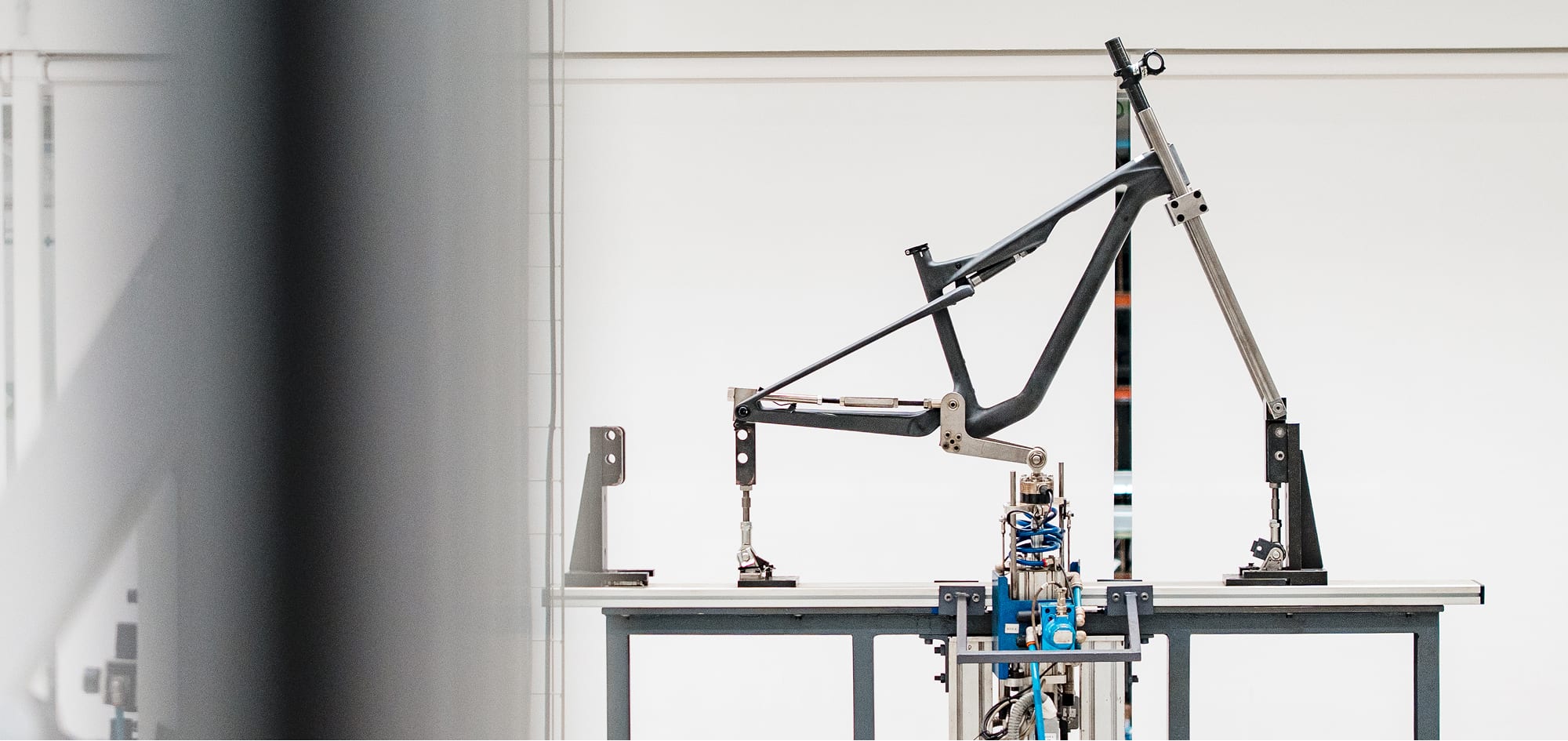
Lab stress tests are key to ensure that we can measure and replicate these results when we take frames into production. In this way we ensure repeatability, as well as ensuring a similar feel between carbon and alloy frames.
These tests validated the final design, achieving a 36% increase in global frame stiffness (primarily driven by enhanced torsional rigidity) and a 22% stiffer rear triangle compared to the previous OMX generation.
Structural Innovations
Achieving these improvements required us to rethink how the frame’s different structures work together. Rather than simply reinforcing individual areas, our engineers focused on the relationships between the front triangle, linkage and rear triangle, identifying opportunities to increase stiffness while reducing unnecessary material.
Four key developments contributed to the final design.
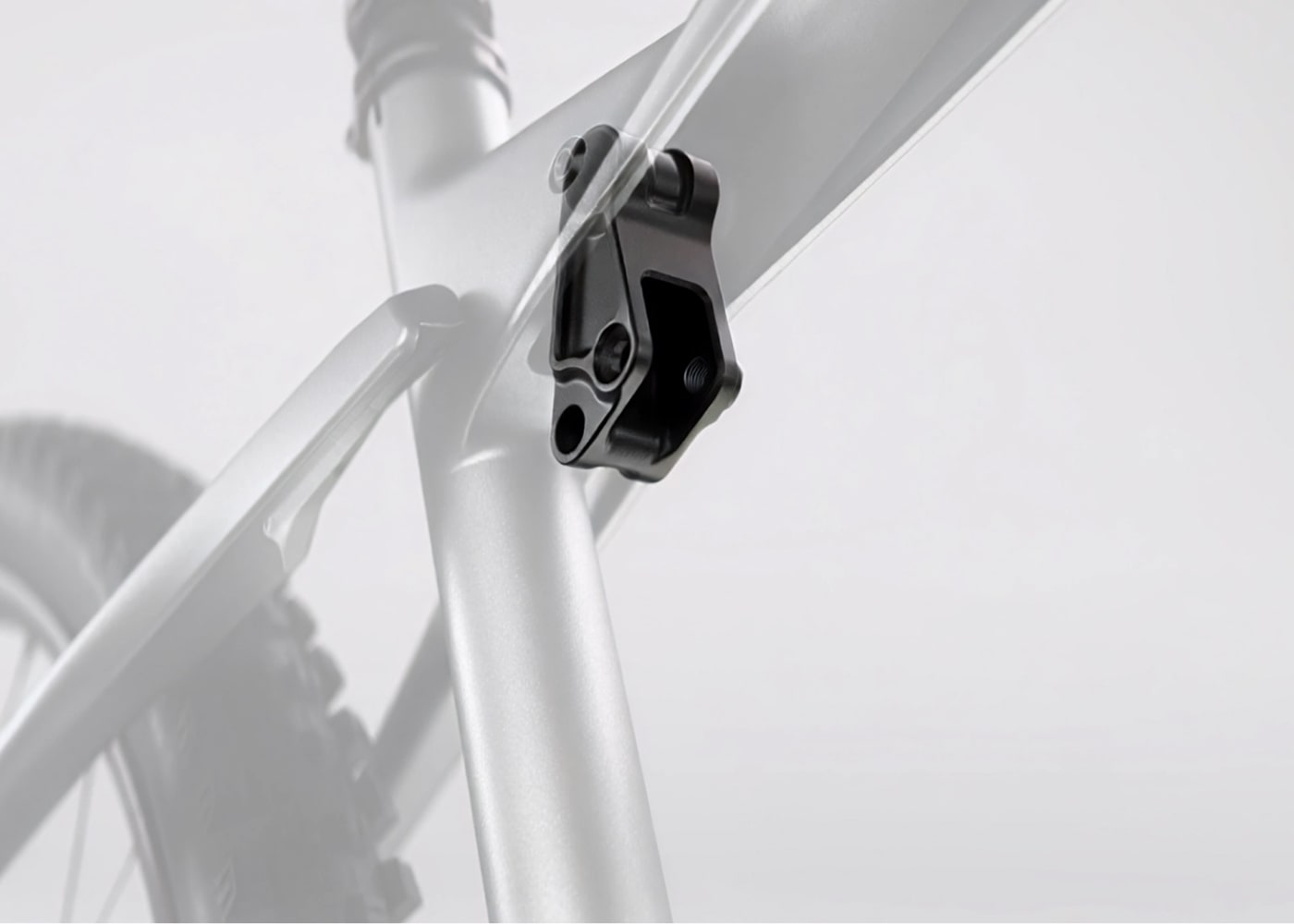
Forged Alloy Linkage
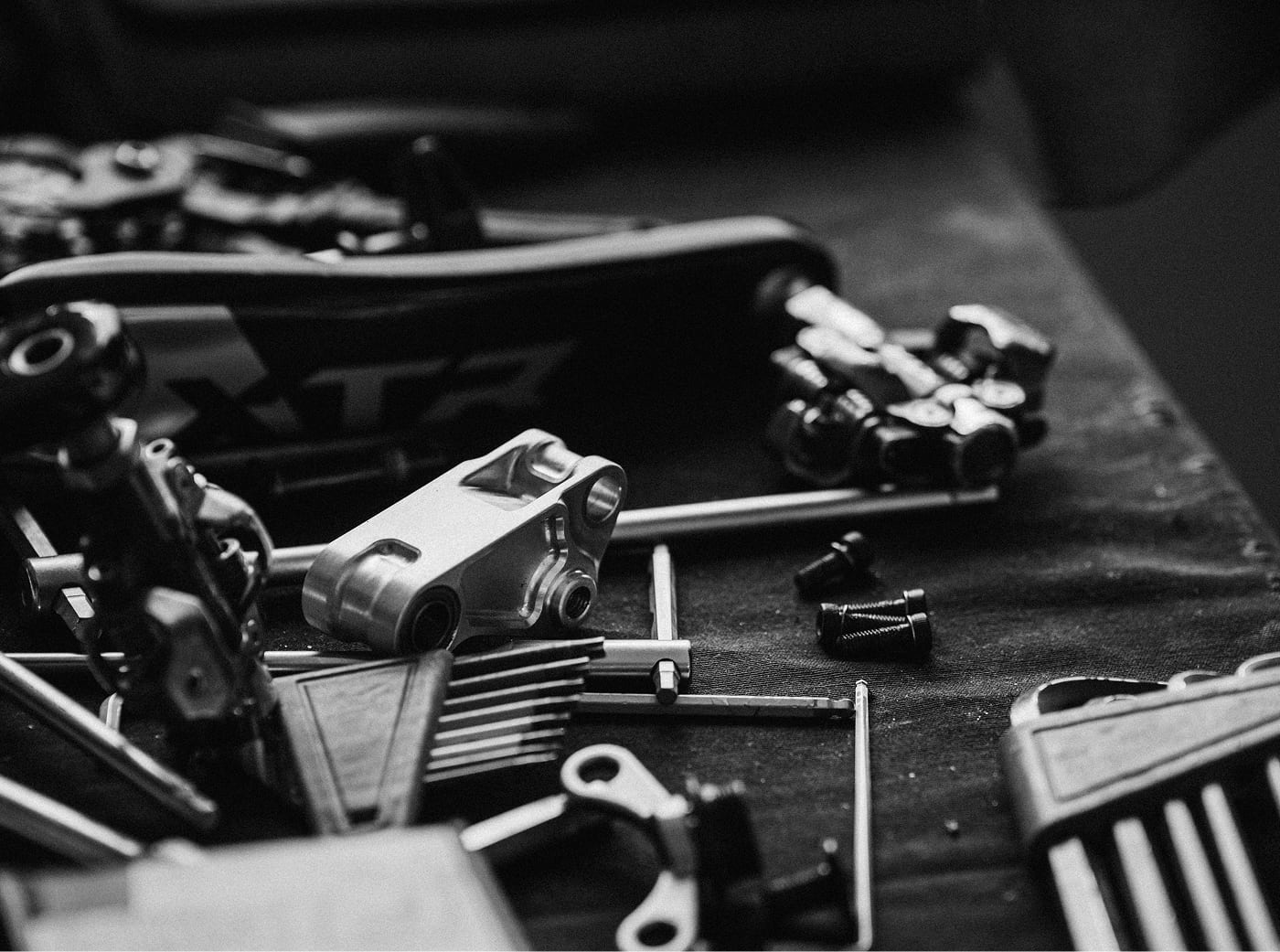
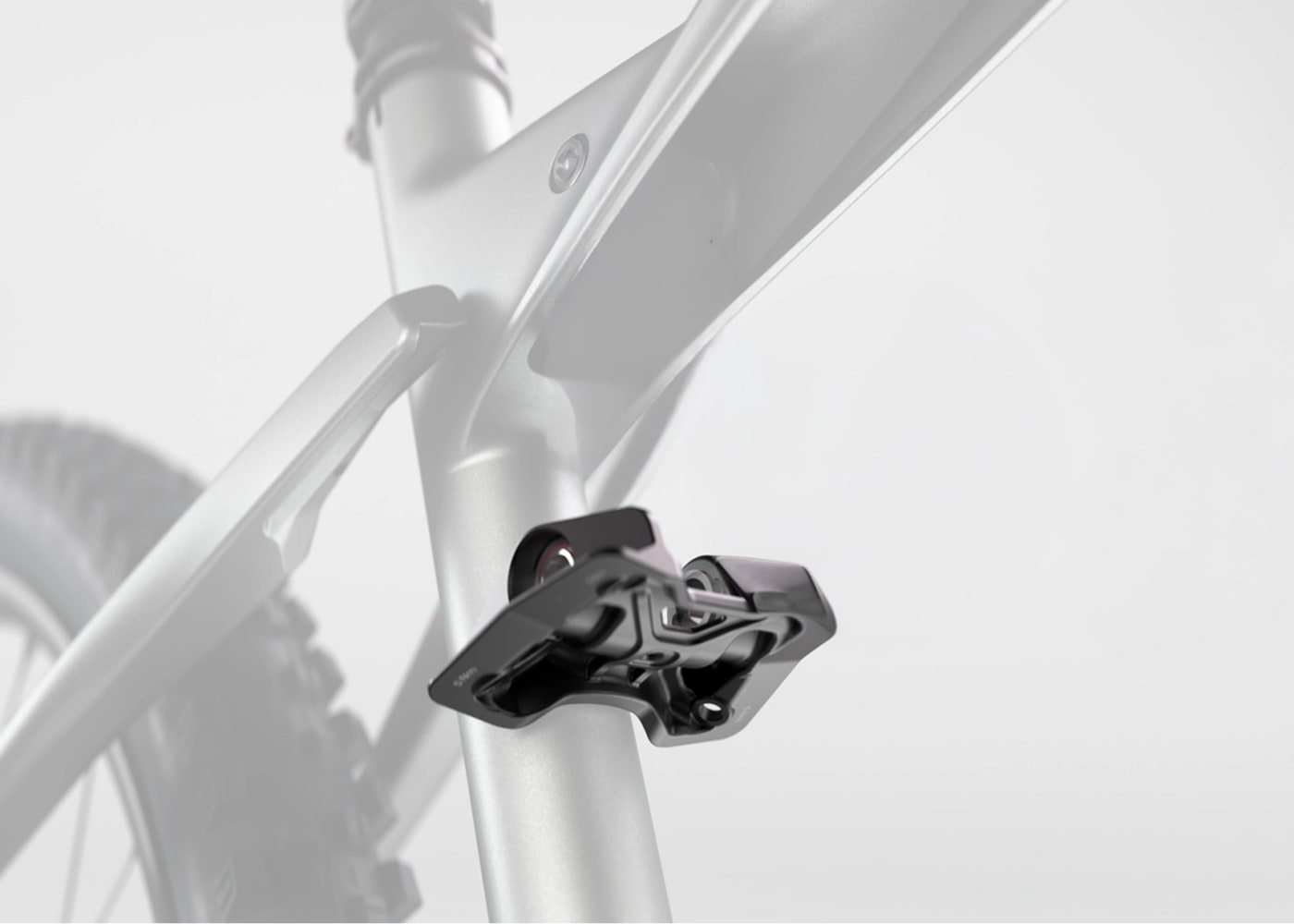
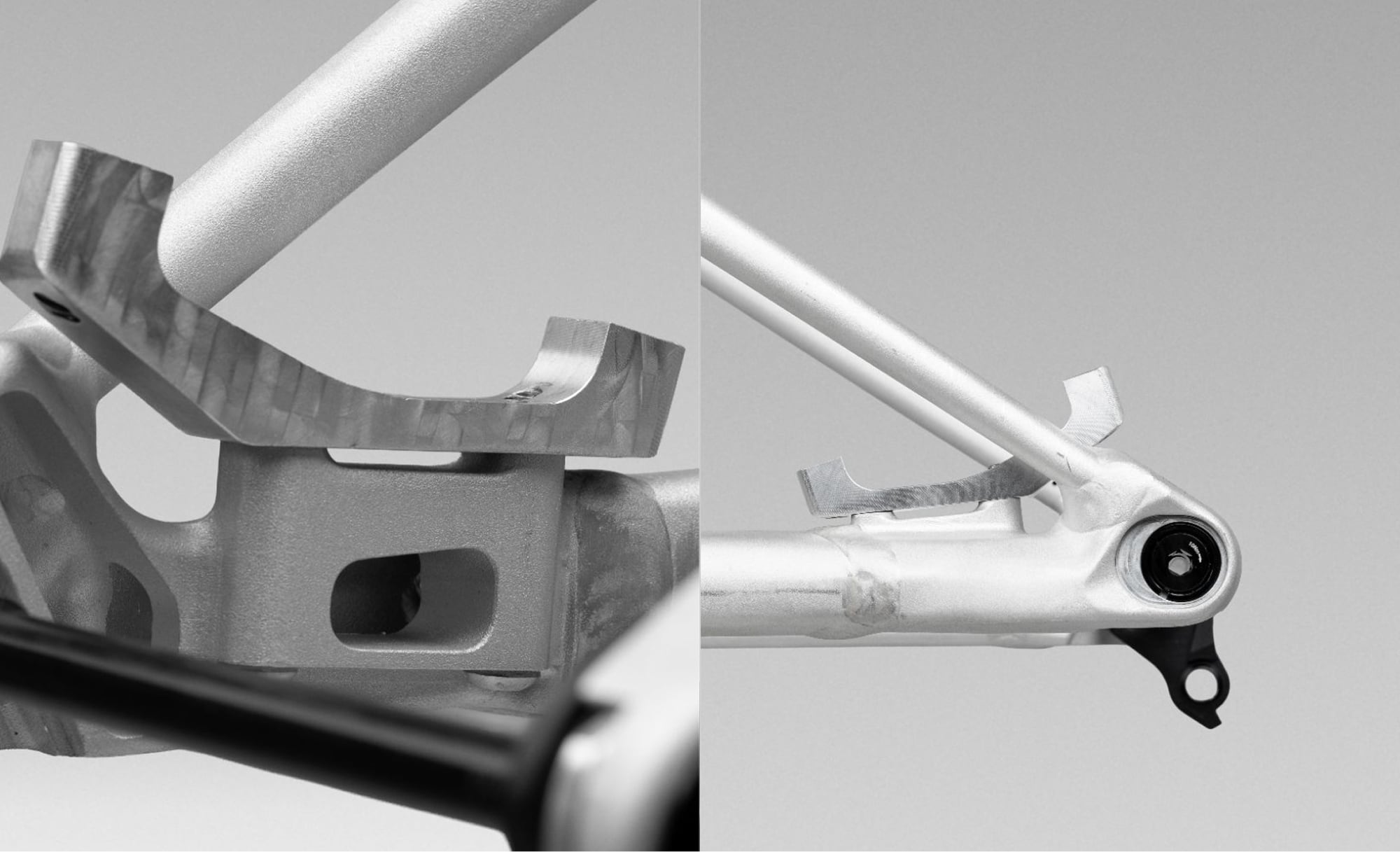
The linkage is subjected to significant forces as the suspension compresses and the rear triangle responds to pedaling and lateral loads. Using FEA, our engineers developed a more compact forged 6061-T6 aluminum mini-link. Reducing its overall dimensions also reduces the leverage forces acting on the link itself, allowing us to optimize its structure without compromising strength. Strategically positioned internal cutouts remove unnecessary material, while the compact design improves stiffness and reduces the link’s weight by approximately 30%.
Integrated Seatstay Bridge
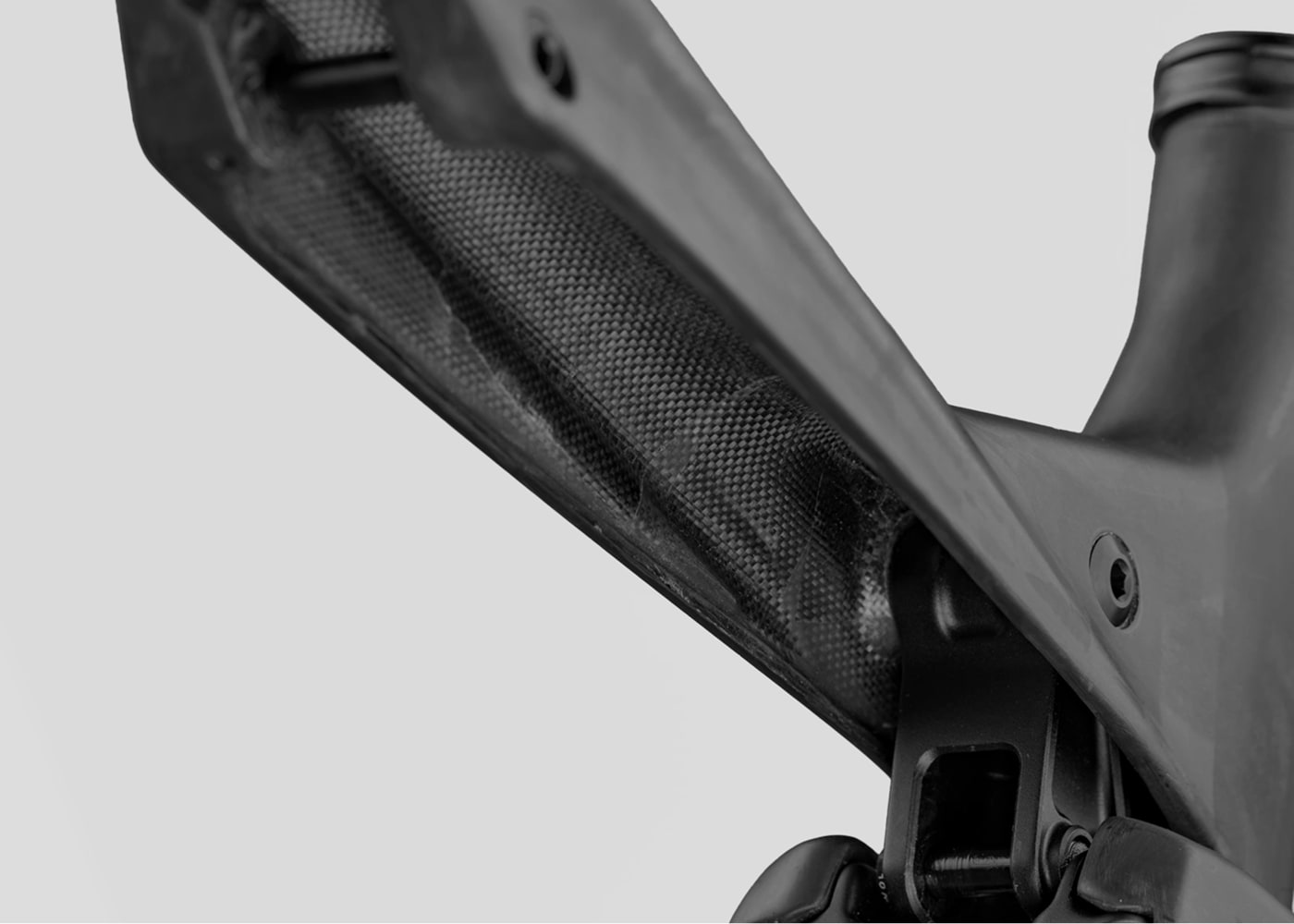
The rear triangle must withstand significant lateral forces while maintaining precise alignment throughout the suspension’s travel. To improve its structural efficiency, we positioned the seatstay bridge directly in front of the seat tube, creating a more rigid connection between the upper rear triangle and the shock mounting area. This configuration helps resist torsional loads during cornering and out-of-saddle efforts, maintaining the alignment of the suspension system and improving rear-end precision.
Winged Top Tube
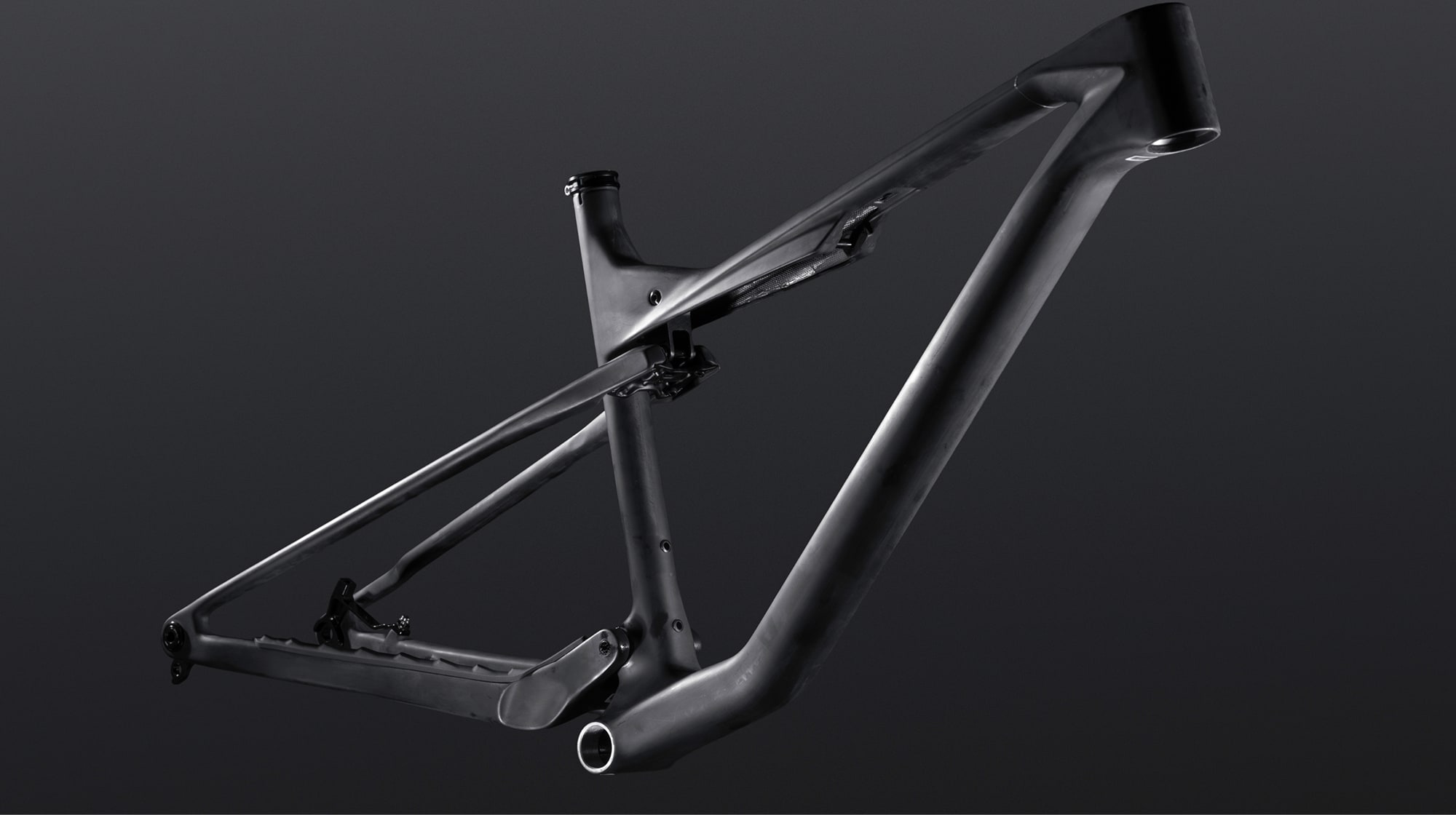
By creating a larger carbon structure with a wider profile, we can better resist the torsional forces generated during demanding riding conditions. This allows the front triangle to maintain its structural integrity under load, contributing to more precise handling and efficient power transfer.
Pinch-Bolt Main Pivot
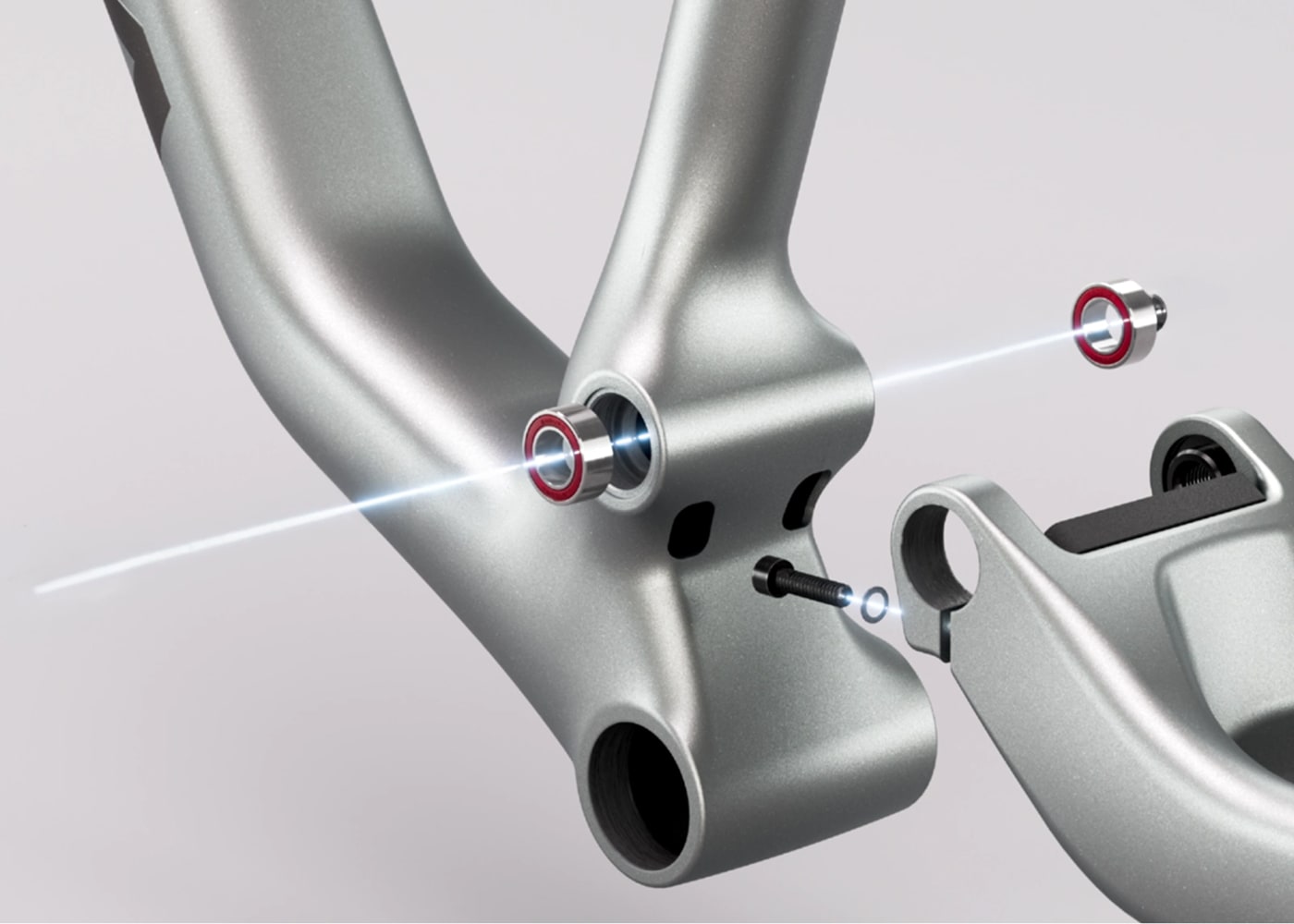
At the main pivot, a redesigned pinch-bolt clamping system increases overall load capacity while dramatically reducing lateral play. This shields the pivot bearings from harsh torsional forces, extending bearing lifespan and maintaining crisp rear-end tracking. The resulting pivot alignment also improves suspension action.
Manufacturing Precision & Kinematic Efficiency
Stiffness improvements were further augmented by refining the carbon manufacturing process itself. By smoothing out frame transitions and eliminating sharp internal angles, carbon fibers compact far more tightly during molding. This tighter compaction expels excess epoxy resin from critical areas. Because resin adds dead weight without contributing to structural strength, removing it significantly improved the frame’s overall stiffness-to-weight ratio.
To ensure every watt is transfered into forward motion without sacrificing traction, Oiz pairs 120mm of travel with regressive suspension kinematics. Co-developed with FOX, the regressive leverage curve delivers a firmer initial stroke that eliminates pedal bob and unwanted sag when climbing with the shock open, while softening into a supple mid-stroke to absorb trail chatter and maintain rear-wheel tracking. High anti-squat levels further resist pedaling forces early in the travel, providing instant acceleration when accelerating out of tight switchbacks or berms.
Pure XC Geometry
The new Oiz builds on proven XC race geometry, with subtle refinements. Using adjustable aluminum prototypes, our engineers explored different configurations, allowing athletes to test and compare geometry changes directly on the trail. One of the clearest findings came from testing rear-end length. Regardless of frame size, athletes consistently preferred the shortest possible chainstays. Combined with Oiz’s exceptionally low stack, this configuration creates a balanced weight distribution and a highly responsive ride. Optimizing the main pivot area allowed us to shorten the chainstays by 2 mm in the final carbon frame.
We also slackened the head angle by 0.2° to improve confidence and control on technical descents without compromising the precise, responsive handling that defines Oiz. Together with a steeper seat tube and a front end optimized for a 120 mm fork, these refinements further optimize its pure XC race geometry.
From Explosive Short Track to Marathons
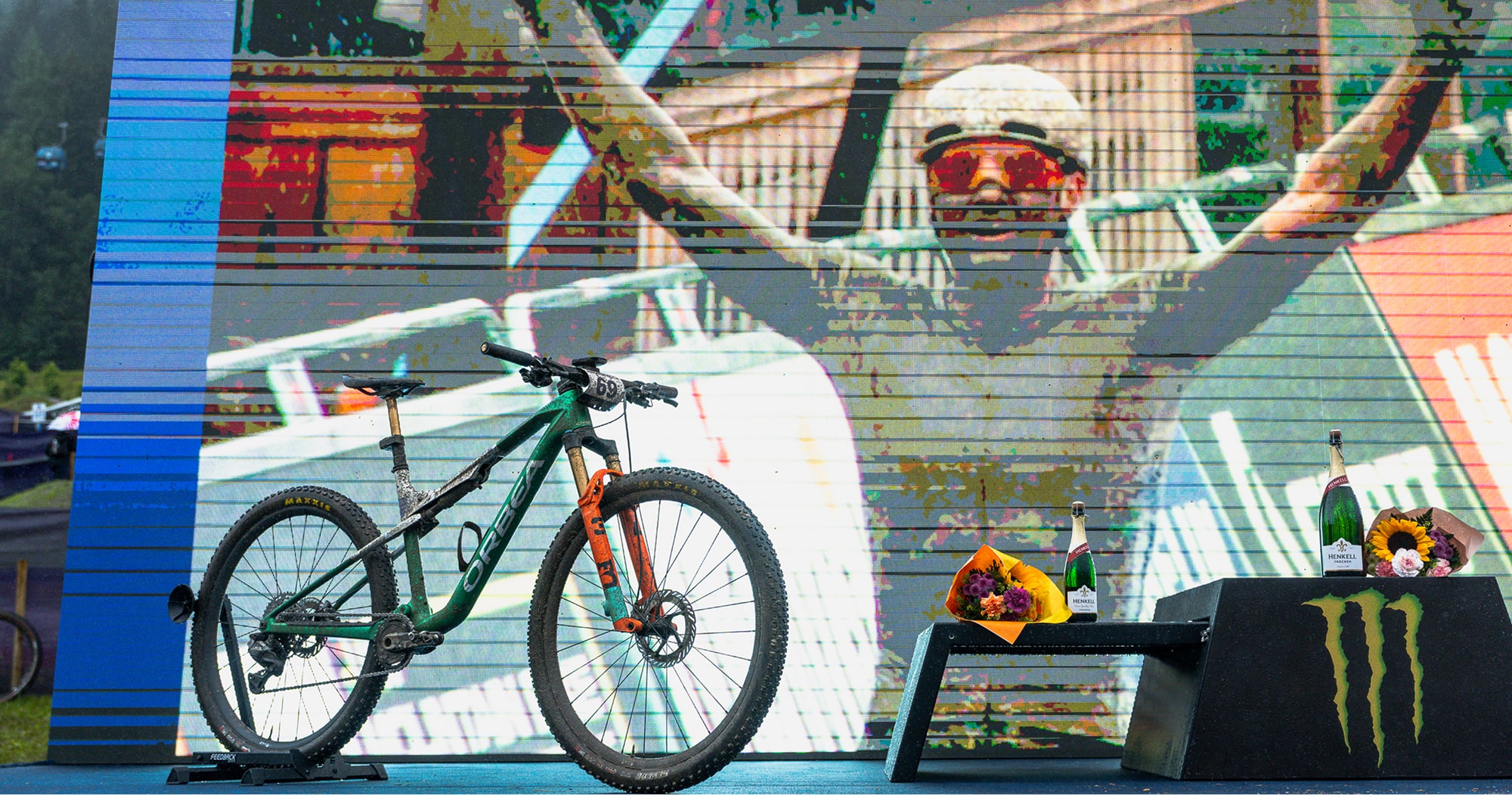
Just one week after the bike’s official launch, that work culminated in its first major milestone at the Leogang World Cup. Simon Andreassen rode the new Oiz to victory in the XCC Short Track race, delivering a demonstration of its capabilities at the highest level of XC competition.
The true measure of a world-class cross-country bike isn’t just winning in a single discipline. It’s versatility. While Simon’s victory proved the Oiz’s capability in high-intensity, 20-minute short-track sprints, modern racing demands a bike able to handle vastly different disciplines and tracks.
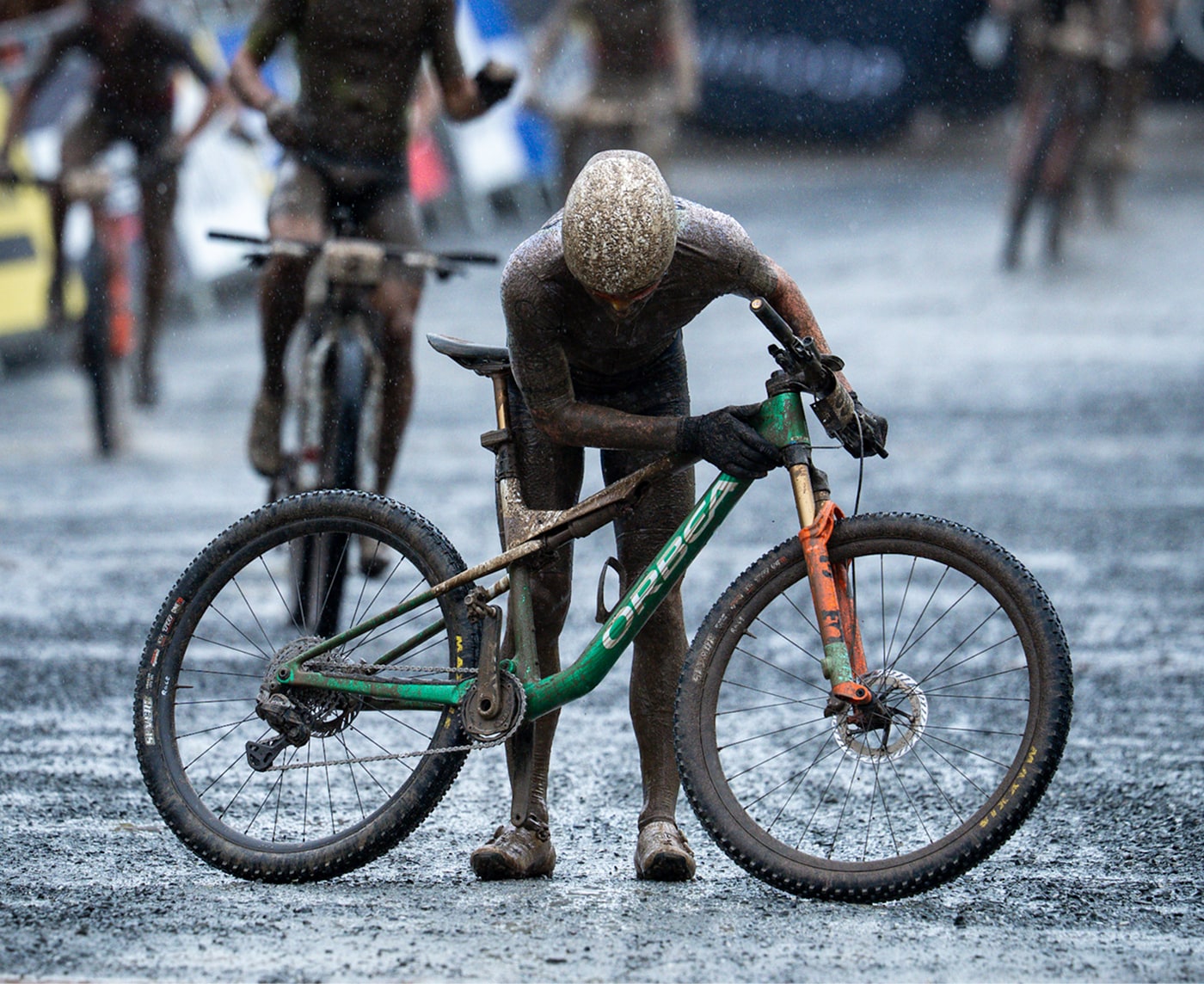
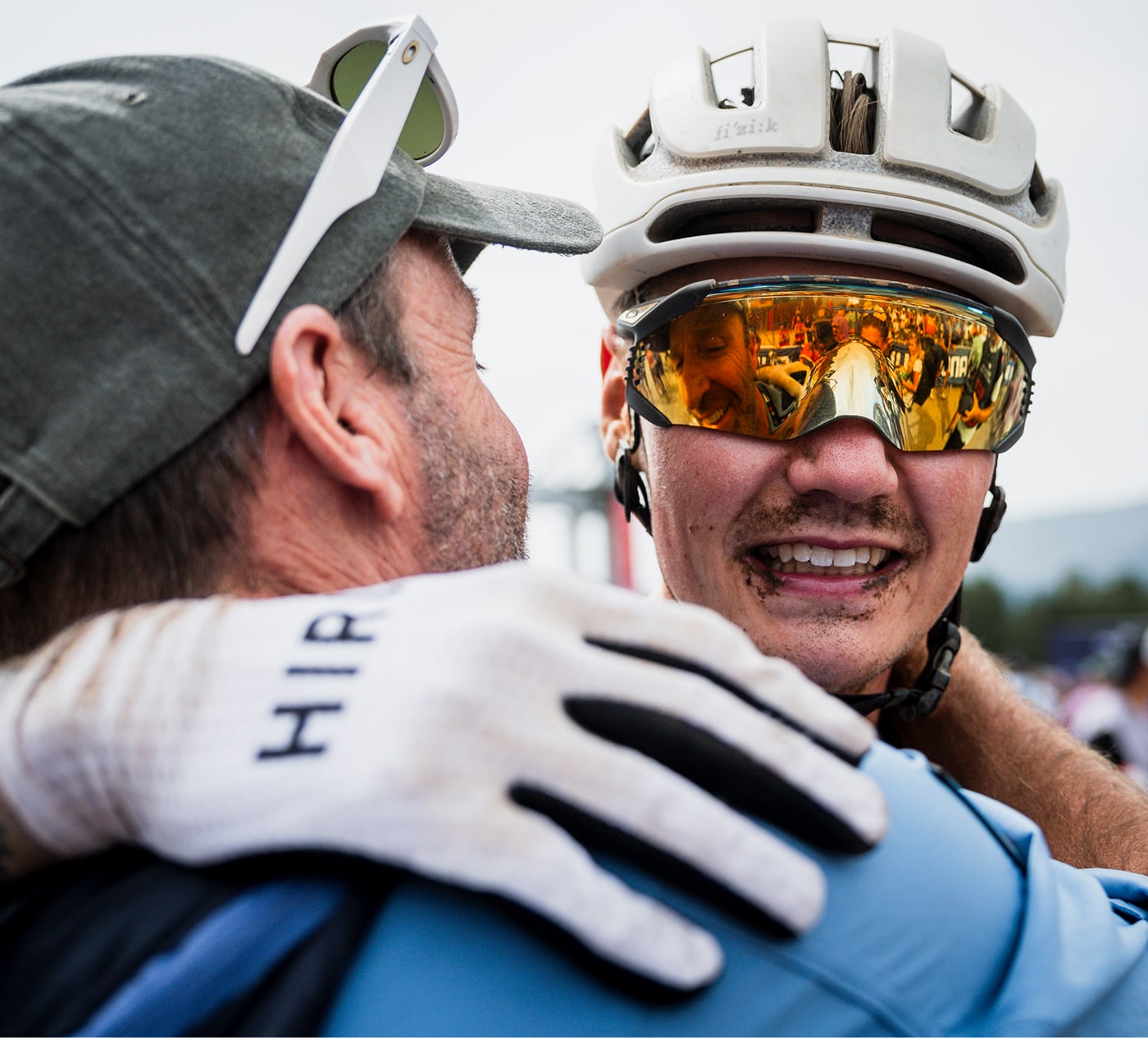
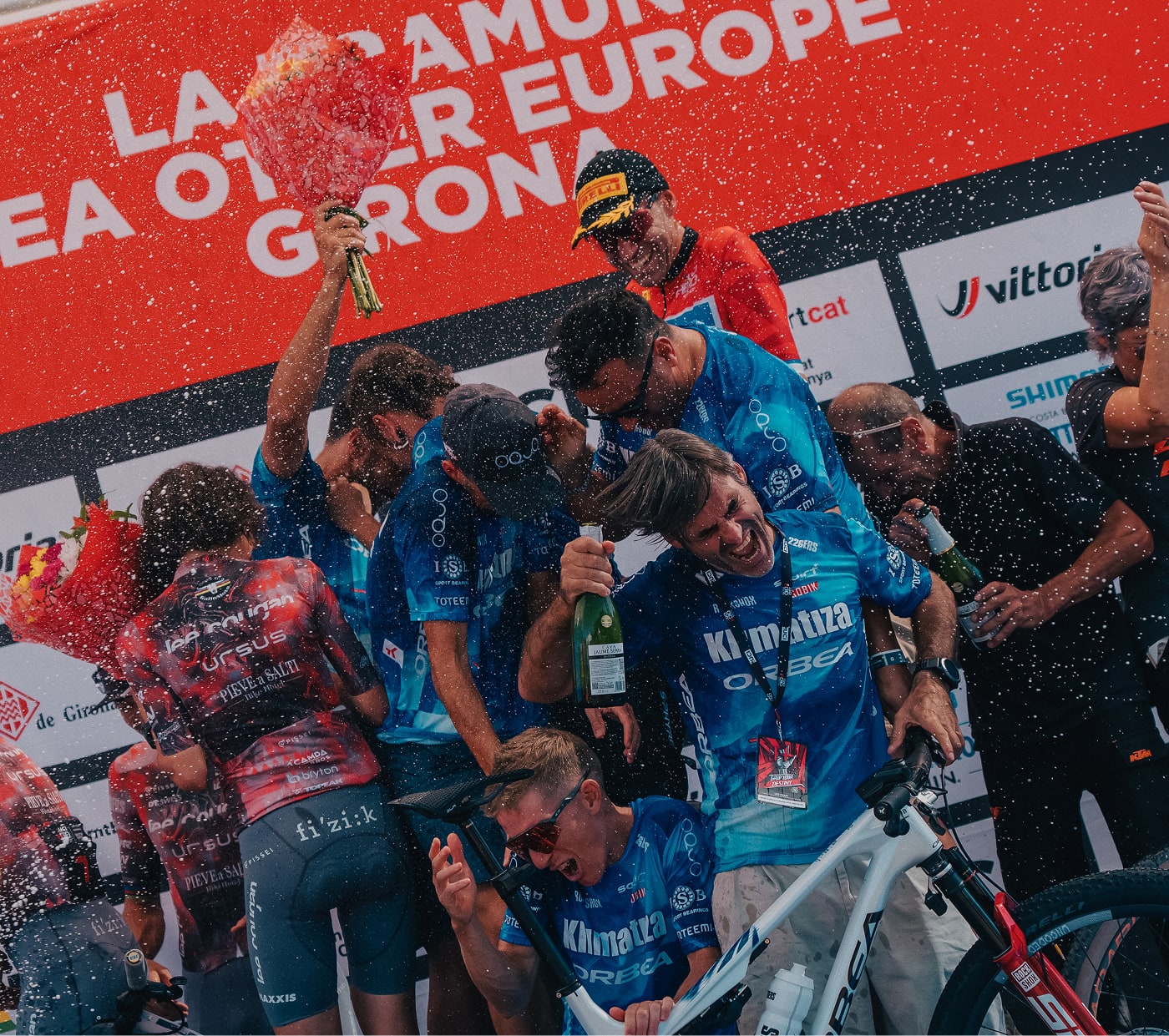
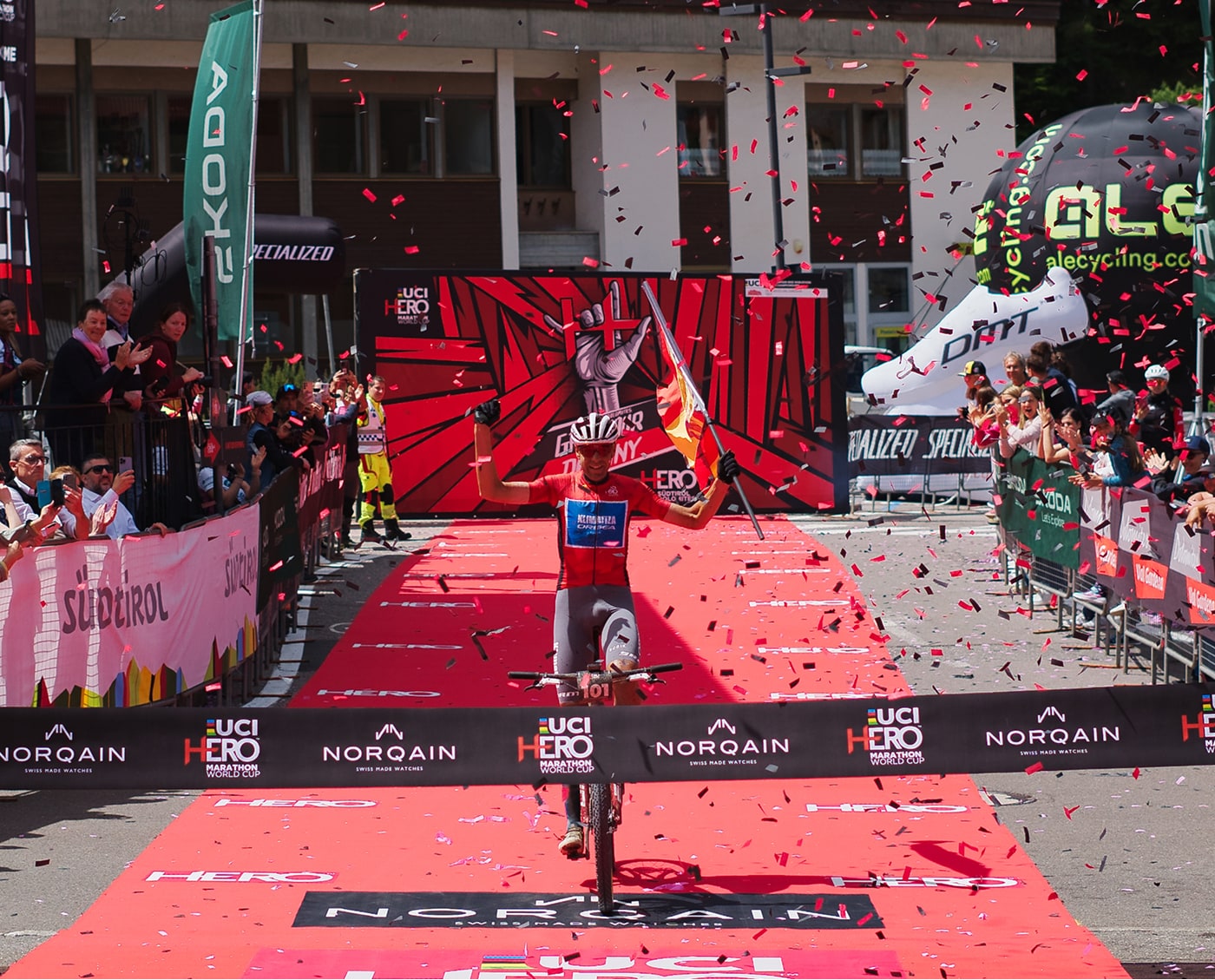
That broad capability was put to the test throughout Spanish champion David Valero’s campaign through the XCM Marathon World Cup circuit. Starting with the circuit’s first full-suspension win to taking the overall title after victories on grueling technical courses like La Tramun in Girona.
Pitting intense 20-minute short-track efforts against grueling marathon races lasting four hours or more highlights a crucial engineering accomplishment: extreme stiffness does not have to mean harshness. Often, building high frame rigidity results in a chatter-inducing ride that fatigue riders over long distances.
The new Oiz proves that targeted structural stiffness can coexist with vibration dampening and active traction. It delivers instant power transfer during explosive sprints, yet absorbs punishing trail feedback over multi-hour endurance courses to keep the rider fresh, comfortable, and fast right through to the final sprint.
Engineered to Win
From the first FEA simulations to prototype testing and competition at the highest level, the development of the new Oiz was a continuous process of evaluating, learning and refining. Every structural decision was made with a clear objective: to find the optimal balance of stiffness, weight and suspension performance, and translate those improvements into speed on the trail.
Through OOLab, we apply our engineering knowledge and tools to understand our products in greater depth, using what we learn to guide their development. The new Oiz is the result of that approach; engineered to push the limits of XC performance and give our athletes every advantage.
Just as our athletes don’t stop training when the clock stops, our work doesn’t end at launch. We know there are always new ideas to test and more opportunities to improve. Stay tuned to see what comes out of the OOLab next.