4 februari, 2021
Build it And They Will Come
Dafydd Davis is a modest man. He wouldn’t have called himself a pioneer unless prompted, but when you listen to his story, you are hearing the history of one of the biggest evolutionary steps in mountain biking.
The late eighties and early nineties had seen the first boom in mountain biking. Despite its growing popularity, riders in the UK were limited to roads and bridleways and a handful of other rights of way.
“So really, you were a pioneer?” “I guess you could say that, yes I guess I was”.
The first trails (which are still part of the existing Coed Y Brenin network) were little more than repurposed old tracks, with the occasional minor tweak and some signposting. They had sections flow, but were also technically challenging – especially given the technology and geometry of bikes at the time.
A trail centre was being born, and with it a new wave of riding in the UK.
Rise M20
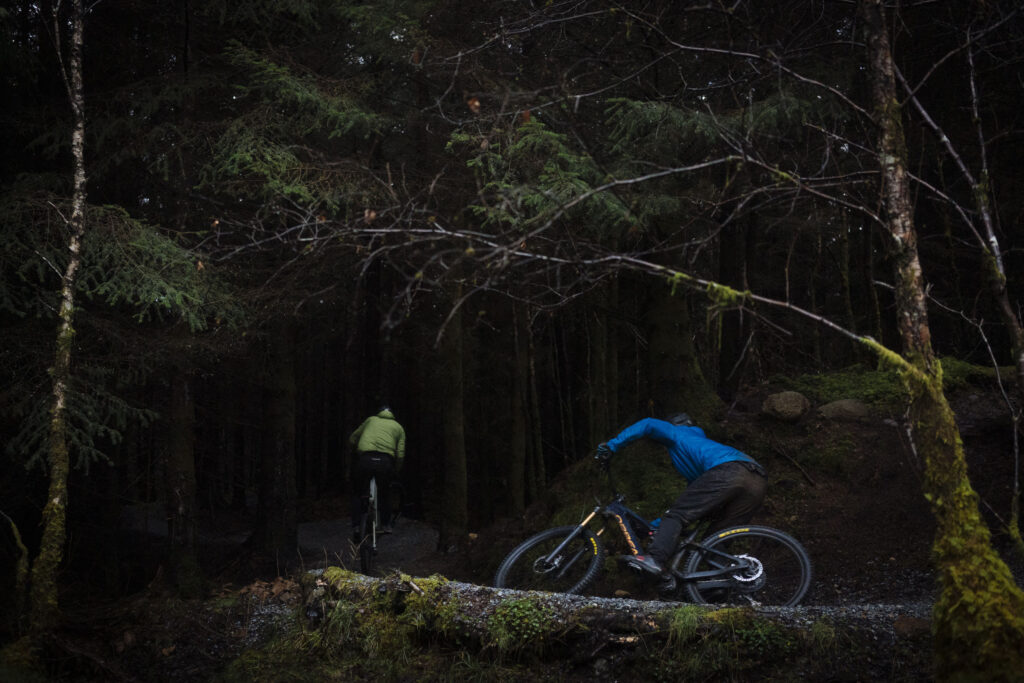
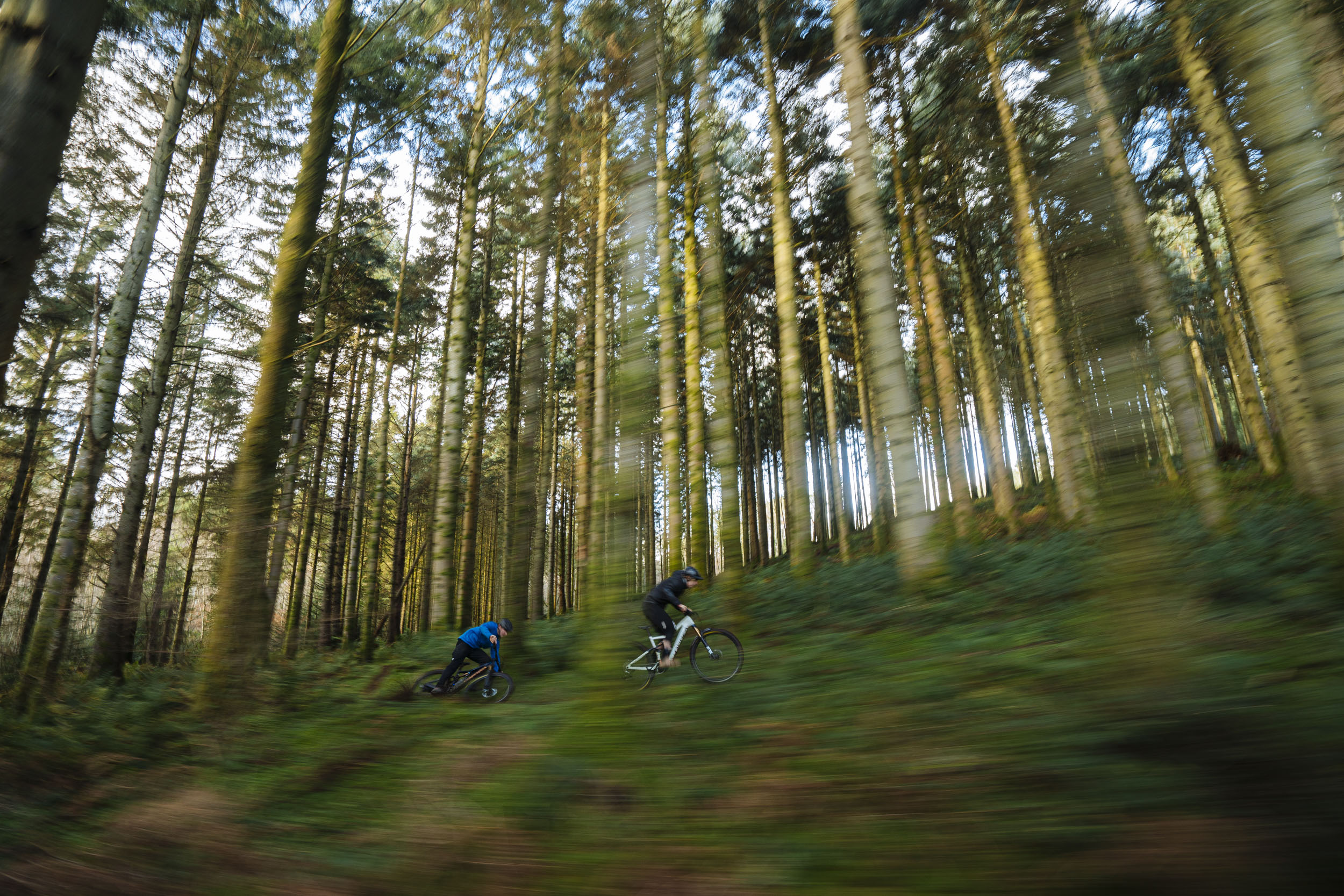
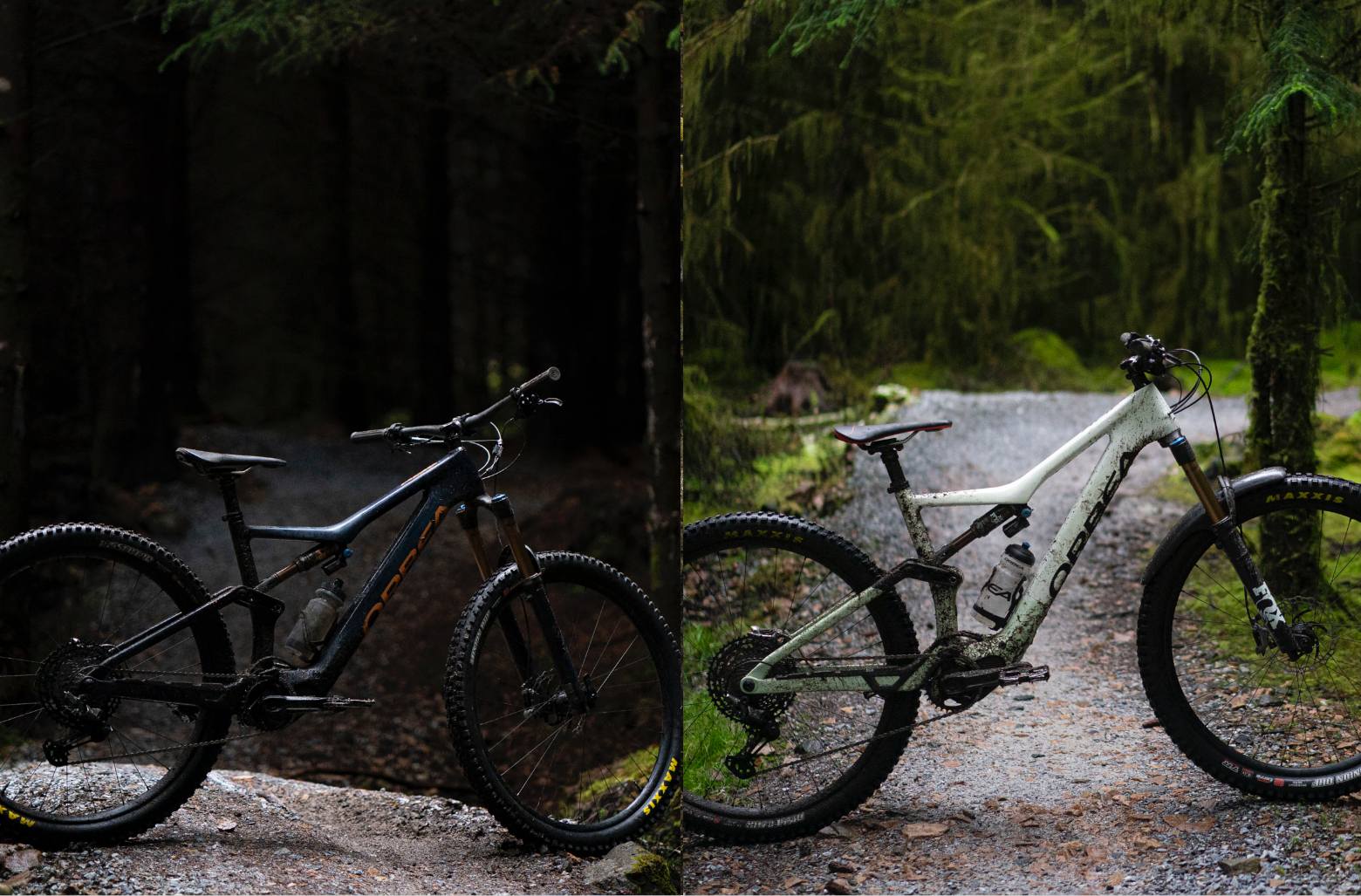
Angus and Rob are riding our Rise H20 in two of the three standard colour combinations available. Rob rides the subtle white and green version and Angus chooses the blue carbon with red-gold logos.
What is a trail centre?
Since those first steps towards a purpose built riding destination, the concept of a trail centre has actually evolved very little.
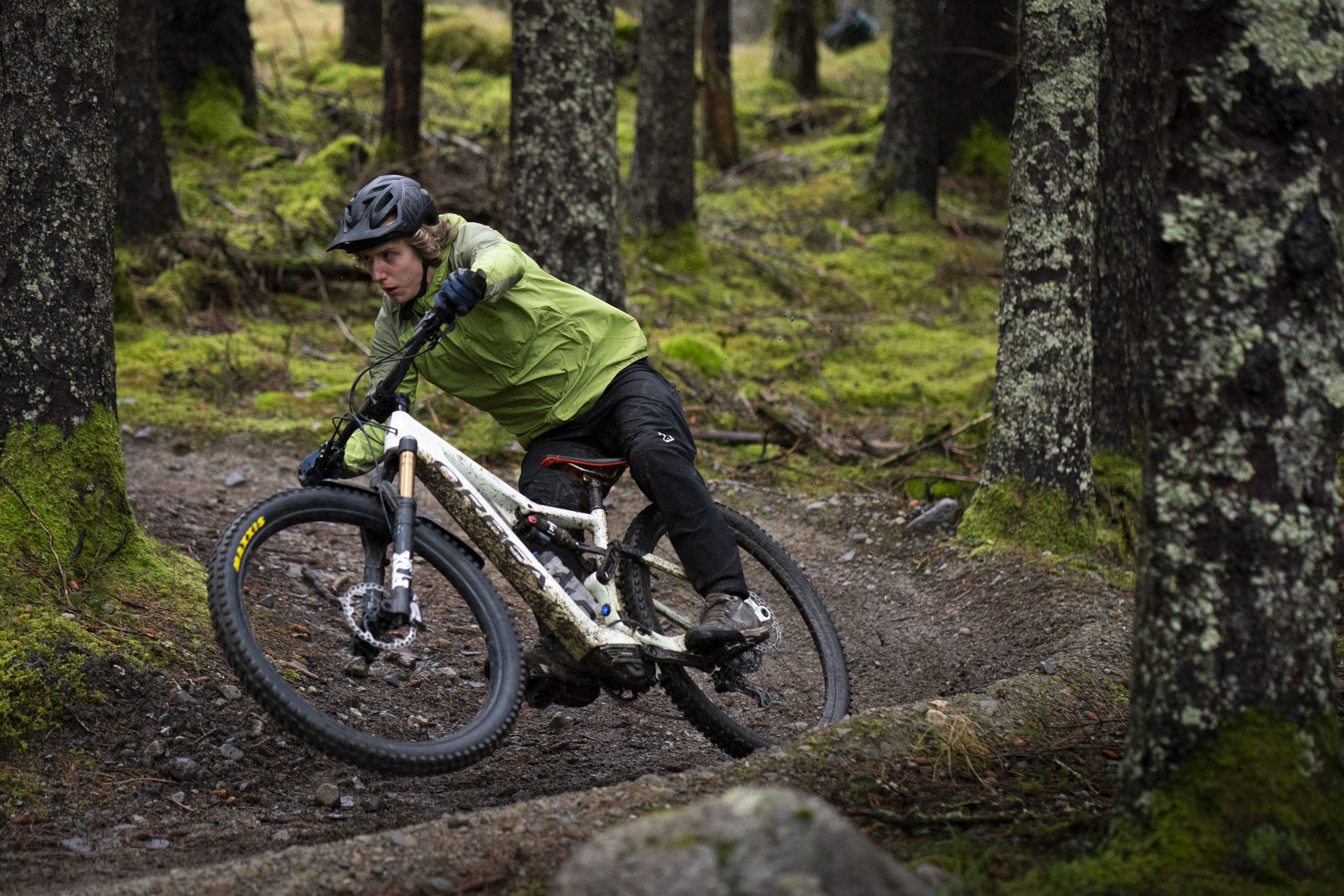
Accessible loops of purpose built trail, with as much singletrack as possible.
There are signposted routes with a clear start and finish point. The riding offers progression and challenge for all levels of rider. Alongside that, there should be everything that makes riders feel welcome – whether that’s parking, a cafe, bikeshop or just someone to say hi to.
As the first trails grew in popularity, grading the trail became more important. Things we take for granted now – from marker posts at each junction to somewhere to buy an inner tube and a bacon butty – needed someone to have the idea in the first place, then make it happen.
History Repeating
History is very rarely the linear story we like to make out. Dafydd was undoubtedly one of the first to create the trail centre concept, but he wasn’t alone. At least not for long.
At around the same time Dafydd was busy in Wales, Rik Allsop was having the same conversations with the Forestry Commission in Scotland and getting his hands dirty building trails in the forests of Mabie and Ae.
Progression
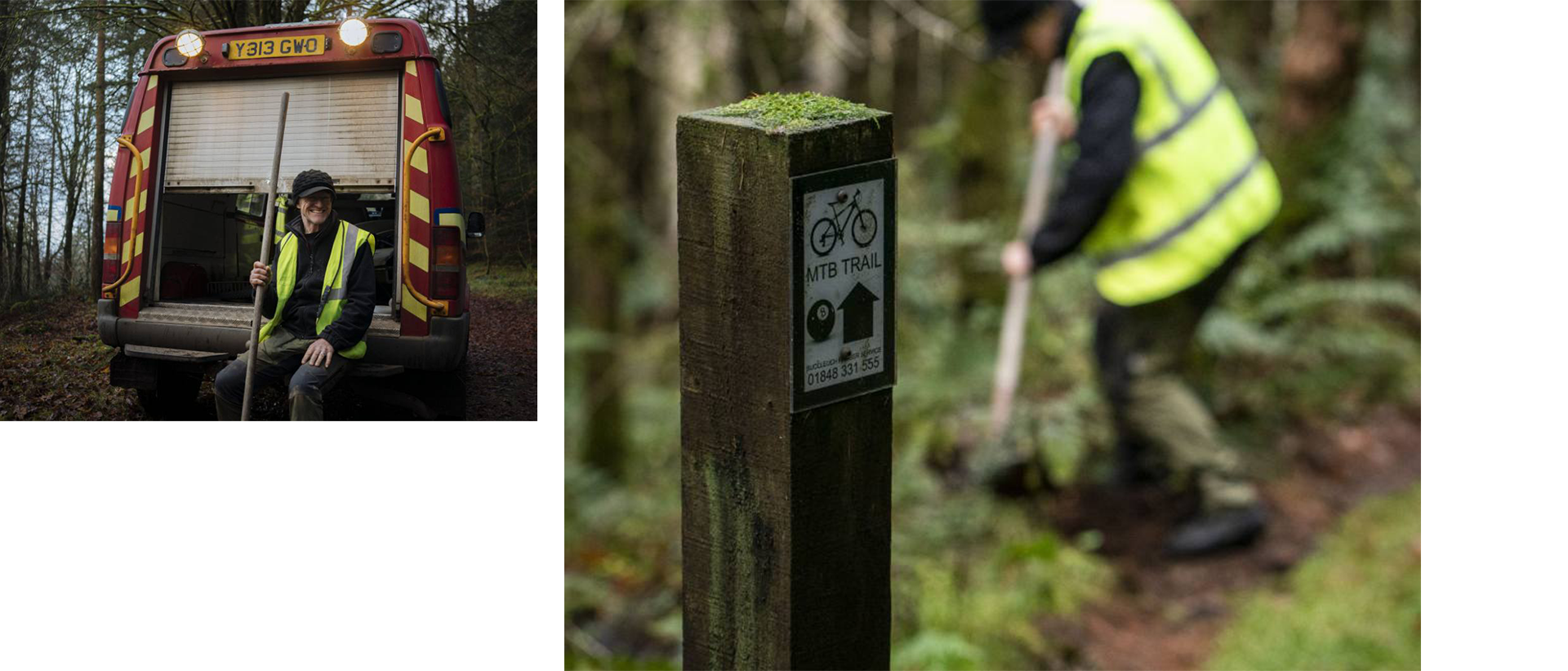
When we met Rik he was propped up against the open door of his bike shop, just up the road from his first projects in Mabie. Inside there’s a treasure trove of kit, some dating as far back as those early days. Framed by another pile of dead inner tubes is a map of the trails at Drumlanrig – all built by Rik on a small budget. Many were created by hand, all using just the resources and materials that were available on site.
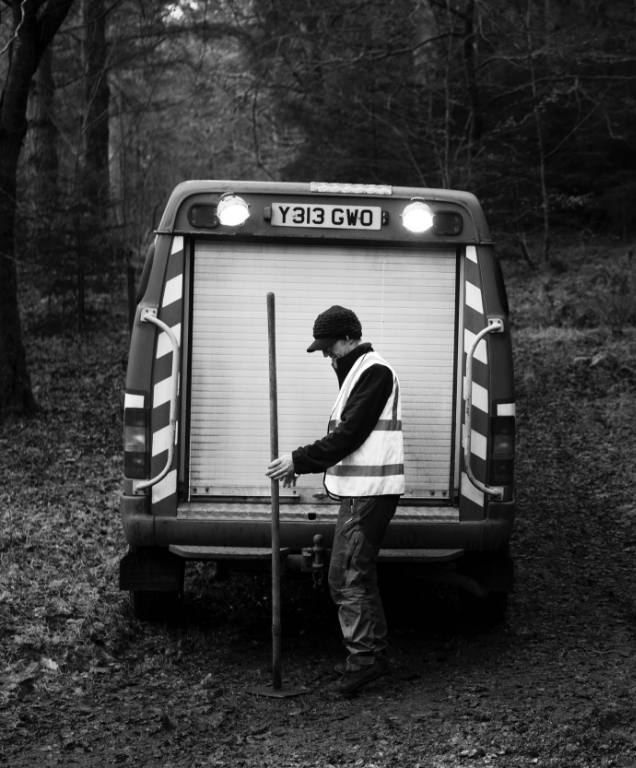
Rik leans back before starting a story, almost like a downhill racer, braced against the start gate. Each tale is told at race pace too.
Each tale is told at race pace too. How else do you pack over twenty years of history into a short conversation?
“I mean, we were doing bits of trail building long before we started working with the Forestry. There was obviously no legality to it, but… there were probably only about five of us mountain bikers in the area, so it’s not like it would be today. I’m not sure if there was one day where we just said, ‘we’ll have a trail centre’, but I think as a group of individuals we realised we needed to have the Forestry Commission on board if we wanted what we were doing to have any longevity”.
This is my first time on the Rise and I couldn’t be having more fun! Angus
Part of the landscape
It’s interesting to hearing Dafydd and Rik both talk about the trails they built. They speak with the same passion and care – a depth of relationship with the land that goes way beyond throwing a riding surface down.
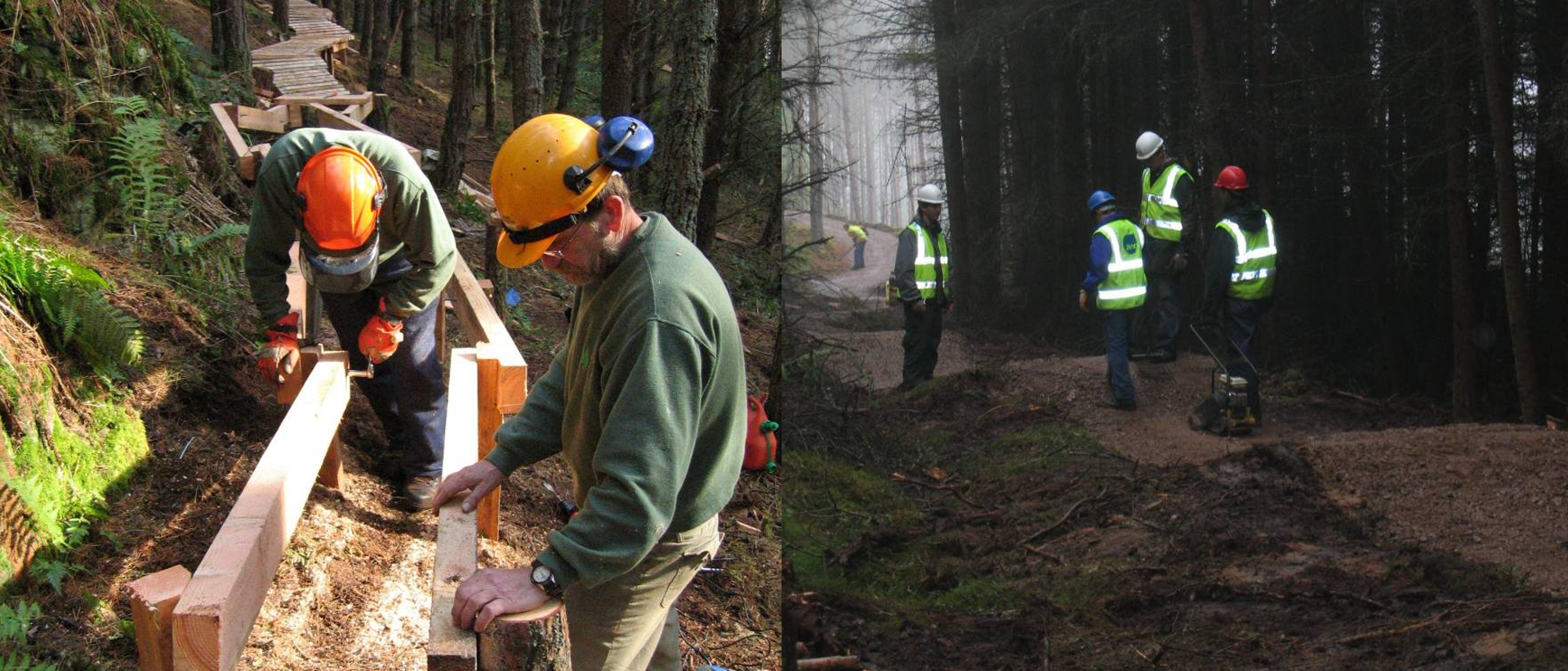
Both only used the materials that were on site to construct the trails and they minimised any resource usage when constructing them. This decision came from a desire to create a trail that felt like it had always been there – that was truly part of the landscape rather than sitting on it. Rik sums it up perfectly:
“Nature gives us so much in the way of features. So much more than you could ever think to design, so why not make the most of it?”
“It’s flow isn’t it?”, says Rik, grasping for the explanation of the blend of engineering, science, art and pure hard work that goes into creating a trail. The real art is in creating flow regardless of whether the terrain is rooty, nadgery or gnarly. It’s a different kind of flow, but it’s there.
There’s a sense of mind play as well as physical play – the reward that comes from piecing together a jigsaw puzzle at speed.
Circular evolution
In some ways both Drumlanrig and Coed Y Brenin are atypical of the hundreds of trail centres that they inspired. Despite being around longer than most, they are interesting and engaging on a modern bike. Speed needs to be managed and lines chosen. How confident a ride you are defines exactly what those lines are.
For literally millions of people, they have made mountain biking more accessible – whether that is geographically, technically or just increasing their awareness of what is out there.

Community
Rik and Dafydd both used another word when they described trail centres: community. Trail centres mean the crowds gathered on any given wet Sunday in the huge visitor centre at Coed-y-Brenin, muddy puddles pooling beneath their feet as they sip on steaming brews. And they also mean the all-comers family rides that Rik leads on a Saturday that are training up a new generation of shredders.
Get to know the bikes from Trail Tales
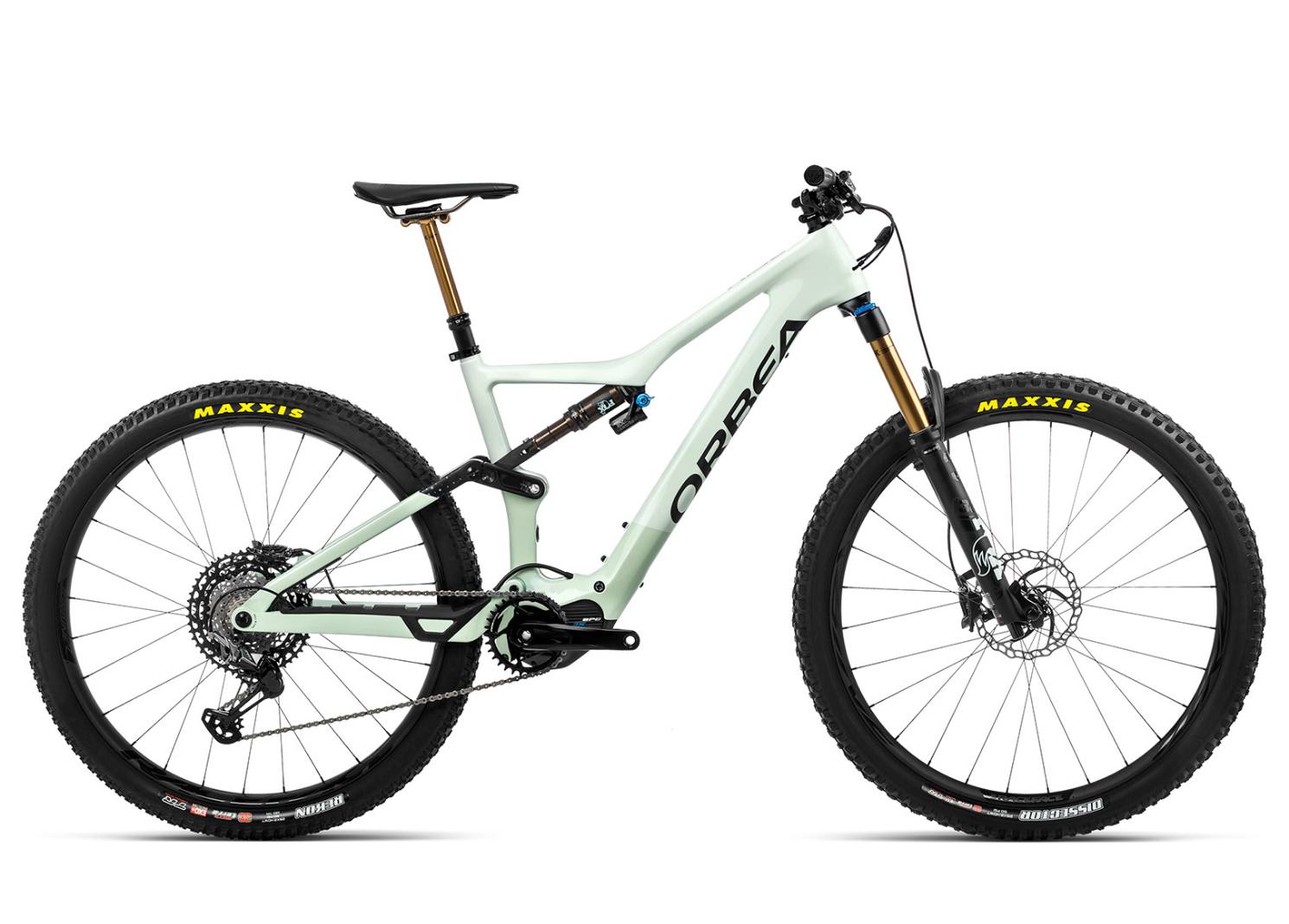
Rise M20
As a trail center bike our Rise is a great choice, with more than enough battery to ride your favourite trails and the natural handling to make it fun.
Trailheads
Rob Jolley
Rob can turn his hand to pretty much anything, from farming to trail work and from mountain biking to gravel. Jolley by name, jolly by nature, Rob brings the good times to every ride.
Angus Hardie
Angus is part of the Orbea family and certainly knows how to put our bikes through their paces. Fast and smooth with style to boot, there’s no trail that Angus can’t tame. Legend has it that Angus was once known as ‘Gin Slayer’ in certain circles.